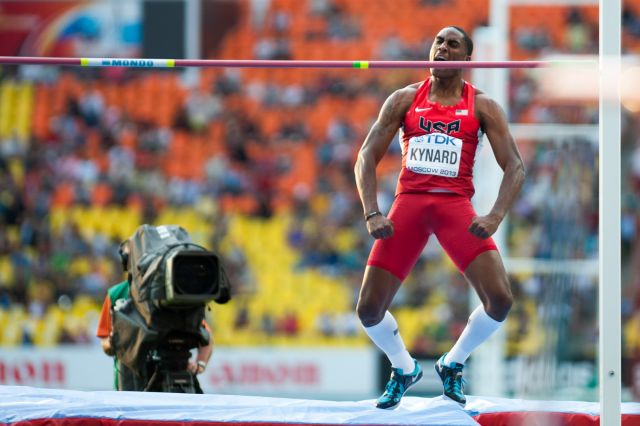
It was time. Almost ten years after the event, the IOC Executive Board decided last weekend to reallocate the medals in several events of the 2012 London Games, marred by doping cases. Topping the list is the men's high jump. Victory went to Russian Ivan Ukhov, but he was disqualified for having been one of the beneficiaries of the vast state-supported doping program. Ivan Ukhov was banned for four years in 2019 by the Court of Arbitration for Sport (CAS). His gold medal will go to the American Erik Kynard (photo above), second in the Olympic final with a jump of 2,33 m. Three men, tied for third place at the end of the competition, also moved up a notch and will receive a silver medal in the coming days: the Canadian Derek Drouin, the British Robbie Grabarz and the Qatari Mutaz Essa Barshim. The IOC also re-awarded the bronze medal in the women's high jump. Initially obtained by the Russian Svetlana Shkolina, it will now be owned by the Spaniard Ruth Beitia. The other three Olympic events whose rankings are changed are the women's long jump, with the disqualification of three finalists (but no medalists); the men's 200 m canoe sprint, where the Lithuanian Jevgenij Shulkin, silver medalist, is removed from the list (his silver medal will go to the Russian Ivan Shtyl, the bronze going to the Spaniard Alfonso Benavidez Lopez de Ayala); and finally the 120 kilo category in men's freestyle wrestling, where the two finalists, the Uzbek Artur Taymazov and the Georgian Davit Modzmanashvili, were both convicted of doping. The gold medal at the London 2012 Games should go to the two bronze medalists at the time of the competition, Iranian Komeil Ghasemi and Russian Bilyal Makhov. But the latter is also suspended for doping, until January 27, 2024. No arrangements will be made immediately to give him his gold medal, until his suspension has ended, specifies the IOC.