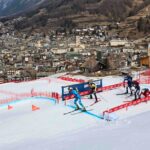

The end of white elephants? According to an IOC report presented on Friday May 20 at the close of the 139th session of the Olympic body, the competition sites have a life after the Games. A long and diverse life. The document entitled “ Over 125 years of Olympic venues: post-Games use » is the first of its kind. It reviews 817 permanent venues and 106 temporary installations over 51 editions of the Games, from Athens 1896 to PyeongChang 2018. The result almost speaks for itself: 85% of the permanent equipment created for the Games since 1896 is still in use, a figure which increases to 92% for the 206 permanent installations used as of 21e century. The report is based on data collected during an extensive consultation carried out with the various parties concerned, then verified by an independent firm, KPMG. The results presented on Friday May 20 at the IOC session may surprise, and even leave you perplexed in the specific case of the Athens Games in 2004, sadly passed into posterity for having left in the Greek capital a collection ofwhite elephants. But according to the investigation carried out by the IOC, of the 32 permanent sites used for the Games in 2004, 75% are still in service. This percentage increases to 83% for the Sapporo 1972 Winter Games (out of 12 permanent venues used), 93% for those of Rio 2016 (out of 28 permanent venues used), 94% for Barcelona 1992 (out of 35 permanent venues used) , and 100% for Vancouver 2010 and Salt Lake City 2002 (out of 12 permanent sites used in both cases). Among the examples cited in the document's illustration, the Sarajevo Olympic Hall, first used for the Winter Games in 1984, then rebuilt after the civil war in the mid-1990s, continues to host sporting and cultural events ; the Birkebeineren stadium in Lillehammer is still widely used, almost 30 years after the Winter Games in 1994, notably for World Cup events in cross-country skiing, biathlon and Nordic combined; The London Aquatics Centre, where the swimming, artistic swimming and modern pentathlon events were held at the 2012 Games, is used for community sport, leisure and recreational activities (over 50 schools use it for their swimming lessons and 300 students meet there every day).