Photo: Faroese Handball Federation/Andrei Vladut Antal.
The Faroe Islands participated in their first Women's Handball World Championship in 2025. The men's team followed suit and will compete against the world's best nations in January 2027. This autonomous territory of Denmark also regularly sends swimmers to the World Championships. Yet, the doors to the Olympic Games remain closed to them. The archipelago hasn't given up hope and even set up a dedicated working group in June. Its president, Uni Holm Johannesen, answers questions from Francs Jeux.
What is the role of your working group?
Our primary mission is to work towards the Olympic recognition of the Faroe Islands within the IOC. The Faroe Islands Sports Confederation (ISF) submitted an application for recognition in 1984. However, for reasons that are not entirely clear, this application was not considered until the 1996 amendment to the Olympic Charter, which limited IOC membership to independent states. The Faroe Islands have always maintained that the 1984 application should have been considered under the rules in force at the time of its submission, and not under those introduced in 1996.
There are currently 12 National Olympic Committees recognized by the IOC that do not represent UN member states: Bermuda, Hong Kong, Chinese Taipei, the U.S. Virgin Islands, the Cayman Islands, the British Virgin Islands, Aruba, the Cook Islands, Guam, American Samoa, Palestine, and Kosovo. The role of the working group is to advocate for a review of the initial bid according to the rules in force at the time of its submission.
Why is it so important for the Faroe Islands to be able to participate in the Olympic Games?
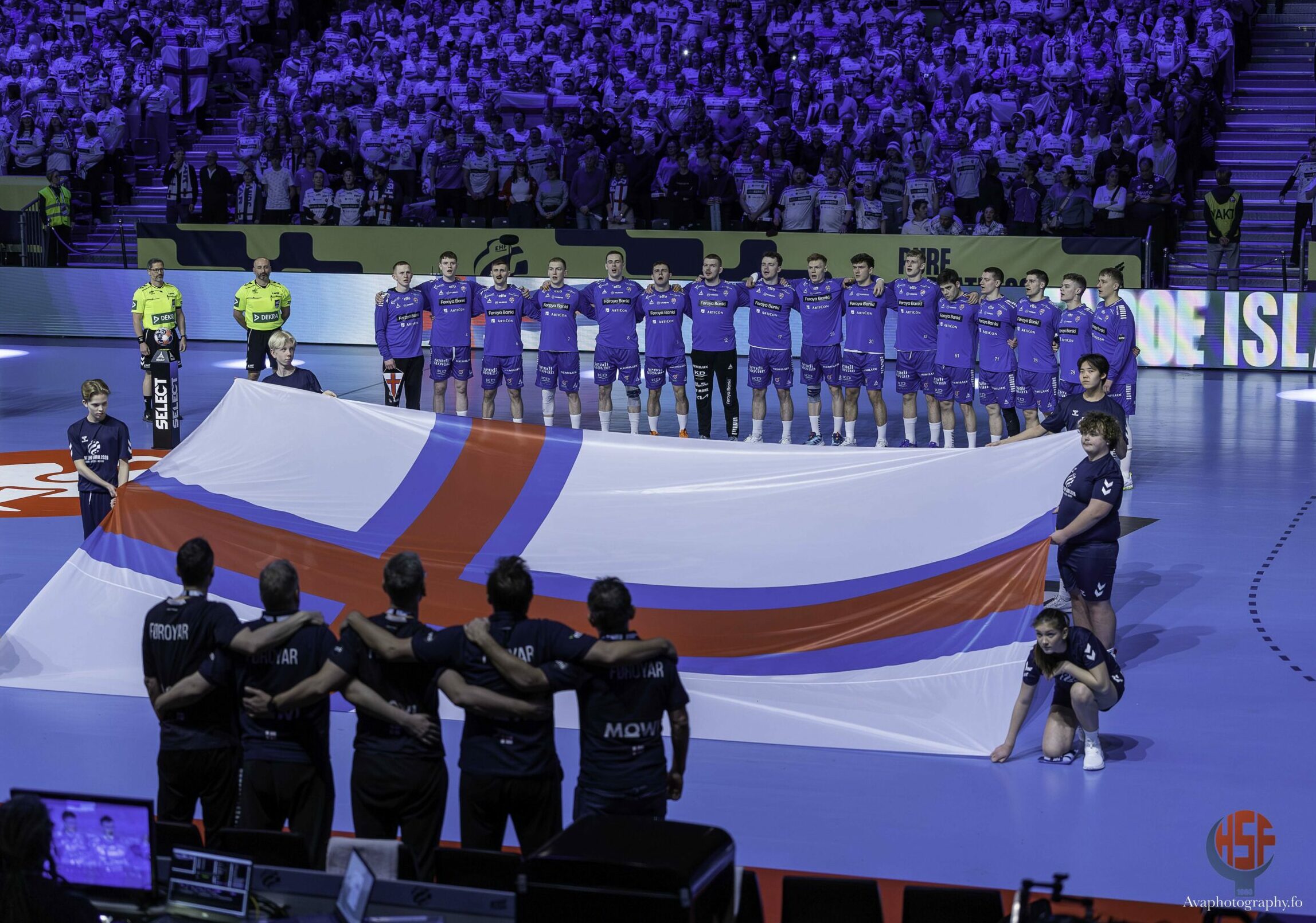
For generations, the Faroe Islands have aspired to participate in the Olympic Games under the Faroese flag. This aspiration was initially a matter of principle, but today it has become a sporting reality. If the results generally meet expectations, both national handball teams could have a chance to qualify for the Olympic qualifying tournament in April 2028. The Faroe Islands have participated in international handball competitions for 50 years. Yet, they are unable to participate in the Olympic Games. We believe this is unfair, as the teams give their all on the court.
The IOC has already directed some Faroese athletes to the Danish Olympic team. This was the case for Faroese swimmer Pál Joensen, who represented the Faroe Islands at the European and World Championships. But in team sports, you can't simply transfer an entire group of players to another national team. The Faroese handball players are therefore at risk of being excluded from the Olympic Games for reasons unrelated to their athletic performance. The Faroe Islands have always been a distinct sporting nation. Our national football team competes internationally under the Faroese flag, our swimmers have won numerous medals worldwide, our rowers are world champions in indoor rowing, and many Faroese athletes aspire to participate in the Olympic Games. What they cannot currently do is participate in the Olympic Games under the same Faroese identity and flag as those under which they compete everywhere else.
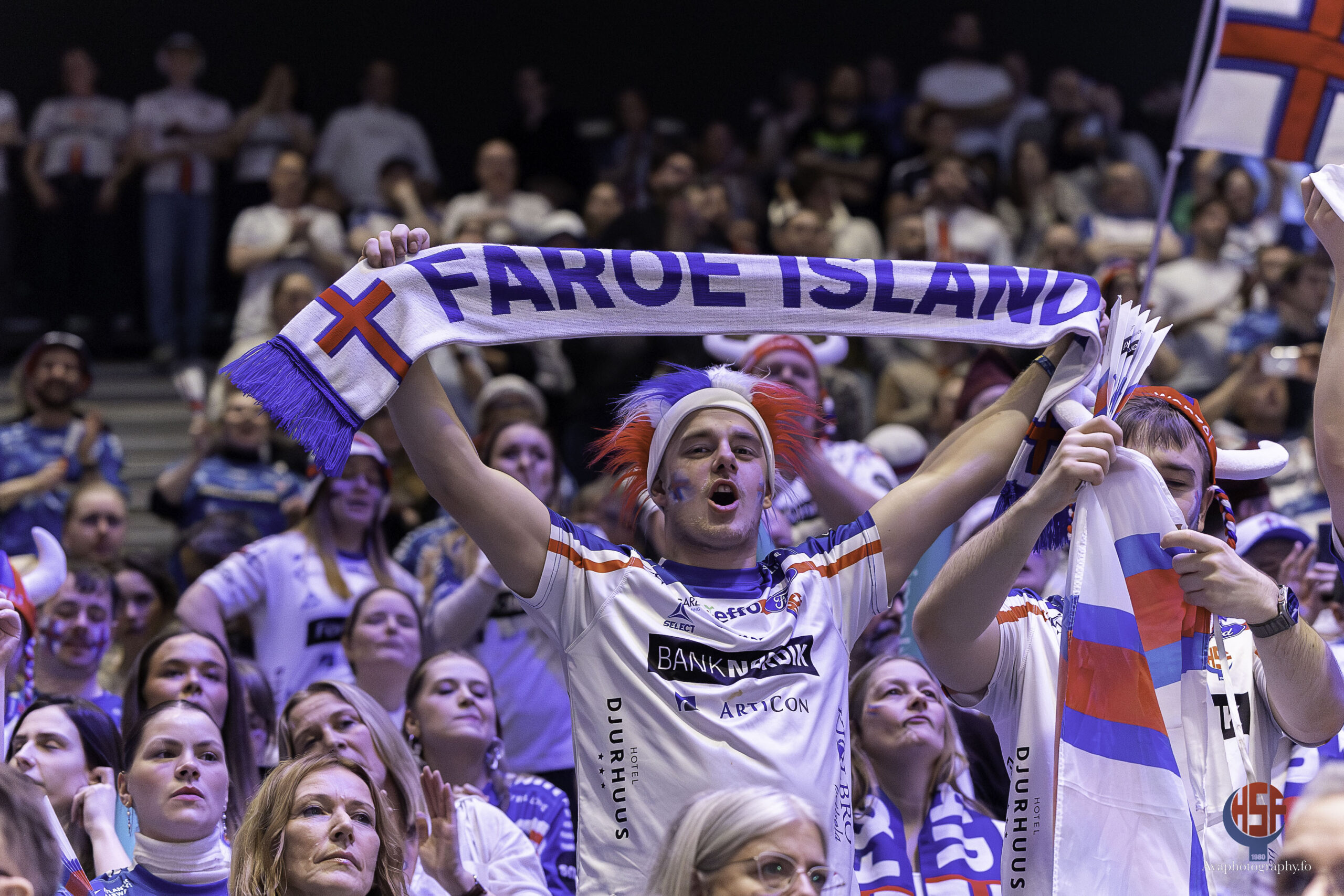
Photo: Faroese Handball Federation/Andrei Vladut Antal.
Do you have any idea how many athletes the Faroe Islands could send to the Olympic Games based on sporting criteria?
It's difficult to answer at this stage. In 2012 and 2016, swimmer Pál Joensen represented Denmark at the Olympics. In 2021 and 2024, rower Sverri Sandberg Nielsen competed in the single sculls. Sára Maria Johansen was also in Paris in 2024. At the 2028 Olympic Games, Vár Guðriðardólr Hansen, the world indoor rowing champion, is also expected to be part of the Danish beach rowing team. These examples give an idea of the level of Faroese athletes, but it's impossible to say exactly how many athletes would be eligible under the auspices of a Faroese Olympic Committee. We are also convinced that recognition by the IOC would be a significant accelerator. Having the opportunity to represent the Faroe Islands at the Olympic Games would create additional motivation for athletes and sports federations to invest in the long-term development of elite sport.
Why do you think the Faroe Islands' candidacy would be more relevant today than in the past?
The Faroe Islands are, and always have been, a sporting nation in their own right. Faroese athletes have competed in the Paralympic Games under their own name for almost 50 years! The sporting landscape has continued to develop. In 2025, the Faroese Tennis Association became a member of Tennis Europe and the International Tennis Federation. The Faroese Weightlifting Federation also achieved independent membership internationally in recent years. What makes the situation even more relevant today is that Faroese athletes, in an increasing number of disciplines, are reaching a level that puts them in a very unusual position. They can represent the Faroe Islands at the European and World Championships under the Faroese flag, but they cannot carry that same sporting identity with them to the Olympic Games. According to the Faroese athletes themselves, representing the Faroe Islands means a great deal to them. It is an important part of their sporting identity.
The IOC had already been approached about this at the beginning of the summer. and had adopted a firm position: the semi-autonomous territories cannot be represented at the Olympic Games. There doesn't seem to be any room for maneuver on this issue; do you really think he could change his mind?
The IOC responded at the beginning of the summer to a letter sent by the Speaker of the Danish Parliament and several other Danish members of parliament. We believe this response does not fully consider the situation that Faroese athletes could face, particularly if the men's or women's handball team qualifies for the Olympic qualifying tournament. We would therefore like to engage in a clearer dialogue with the IOC on how this situation can be reconciled with the Olympic principle of prioritizing athletes. The Faroe Islands have participated in international competitions under their own name in a wide range of sports for decades. We therefore believe the IOC's approach focuses too narrowly on the issue of statehood when determining what constitutes a recognized sporting nation. Our position is that the sporting reality of the Faroe Islands, as well as the rights and opportunities of Faroese athletes, should also be part of the discussion.
Do you have the support of certain international federations? They could advocate on your behalf.
We have encountered a great deal of goodwill when we have presented our cause to individuals and organizations internationally. We are currently in discussions with the International Handball Federation regarding this specific issue. Our approach is to seek the support and understanding of the relevant international federations through dialogue, while continuing to advocate for our cause directly with the IOC.
Do you have a timeline in mind?
First, we would like to know clearly what would happen if the men's or women's handball team qualified for the Olympic Qualifying Tournament (OQT). It would be extremely regrettable and unfair if the Faroe Islands were suddenly unable to participate, given that the team qualified based on its sporting performance. Faroese handball has made significant progress, and even if there is no qualification for the 2028 OQT, the question is likely to arise again in 2032. As Faroese athletes improve, the question of whether they can represent the Faroe Islands at the Olympic Games will only become more relevant. That is why we want to engage in a clear and constructive dialogue with the IOC well before the 2028 qualification process reaches that stage.