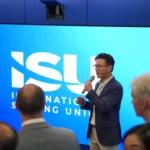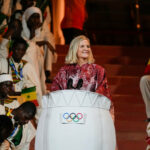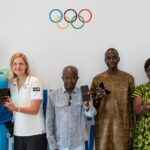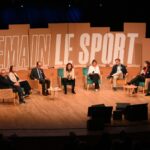
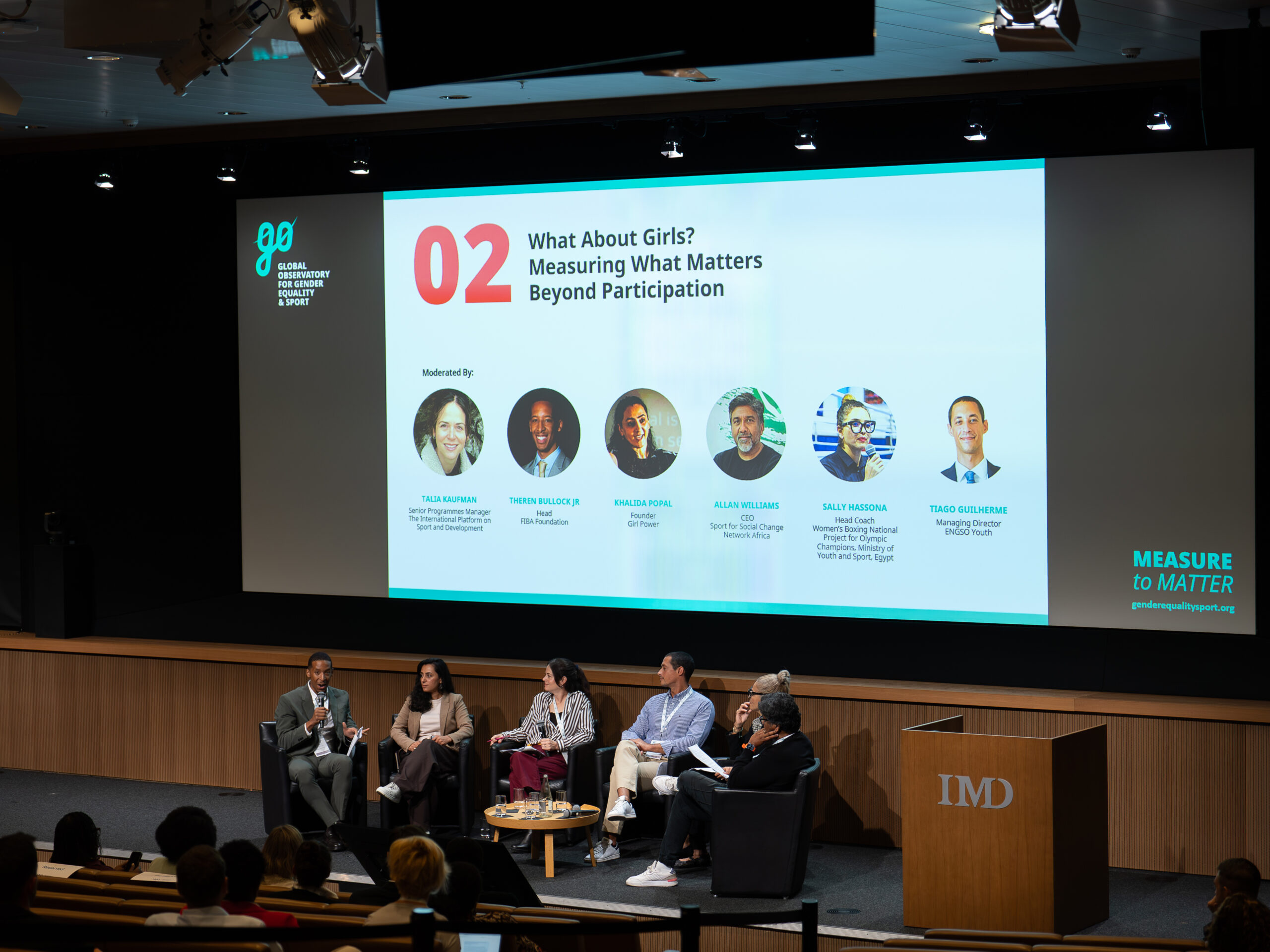
On Tuesday, September 29, Lausanne was no longer just the Olympic capital: it was also the capital of gender equality in sport. 155 participants from every continent gathered at the IMD Campus for the third edition of the Gender Equality and Sport+ conference, organized by the Observatory for Gender Equality and Sport (GO). How can inclusive policies be implemented? What data should be used? How can their effectiveness be measured? These questions fueled the discussions throughout the day. Answering them is a challenge, but everyone left with a desire to push the boundaries even further.
"The girls want to sit at the decision-makers' table."
« It's difficult to see what you don't measure, that's why data is important “Women are still underrepresented in research, both as researchers and as subjects of study,” insisted Lausanne Mayor Grégoire Junod in his opening remarks. “This has concrete consequences at all levels. A concrete example: it took until 2025 for…” football boots designed specifically for women are finally being developed, because research had not focused on the subject.
« Data is essential, supports Felicite Rwemarika, president of the Observatory. They allow us to better understand where we are, to identify the direction to follow, to report on progress and what remains to be done. And, ultimately, of create the world we want The GO launched a Knowledge Hub last year to centralize and share information and resources on gender equality, and thus help decision-makers – governments, sports organizations – to make informed decisions.
The goal is clear: to encourage more girls and women to participate in sports, so that they can seize all the opportunities that come with it, in terms of personal development as well as professional prospects. I would like, for the next generation, for young people to choose a sport without feeling insecure, with the feeling that they belong."This is evidenced by former basketball player Géraldine Yema Robert, now a sports advisor to the President of Gabon."What gives me hope is that the girls don't just want to participate. They want to sit at the table where the decisions are made. »
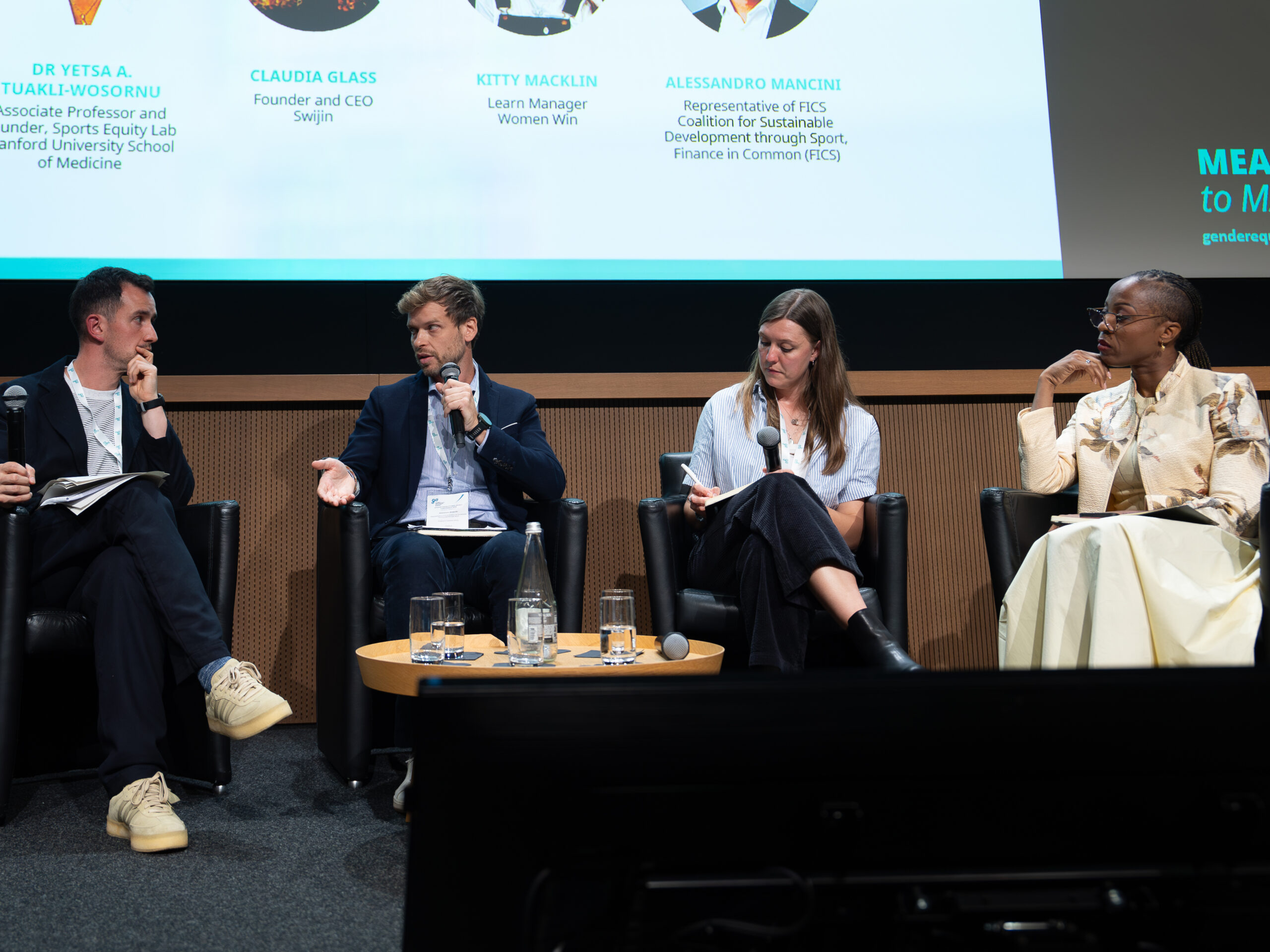
All stakeholders – government representatives, international sports federations, academics – agreed on the need to make sport a space where women can be themselves. However, particular attention must be paid to the production of the crucial data. Sally Hassona, a boxing coach affiliated with the Egyptian Ministry of Sports, emphasized that the researchers' profile was key: Do they know what life is like for an athlete? Have they experienced a socio-economic situation similar to the people to whom the questionnaire is sent? What is their cultural background? “This is important because certain challenges arising in specific contexts could be overlooked. Examples include religious barriers or early marriages in rural areas. Former footballer Khalida Popal, who works with Afghan women, also emphasized the need to consider the researchers’ backgrounds, particularly when addressing the experiences of refugees.”
"Measuring" smiles
Tiago Guilherme, director of the Youth branch of the European Sports NGO organization (ENGSO), raised a key point: the importance of combining quantitative and qualitative data. The best measure for me is the smile at the end of training or at the end of the day. " he illustrates. Indeed, numbers don't tell the whole story." The data shows us the trends, but the athletes explain what's behind them., adds Géraldine Yema Robert. We need to talk about athletes, but also talk with athletes: we sometimes forget that they have a say in identifying problems and evaluating programs. For example, listening to young girls who are discovering sports can reveal obstacles to participation. »
The International Volleyball Federation can attest to this: it partnered with the Observatory to establish a baseline assessment. The report recently received by the FIVB notably emphasizes the efforts needed to increase the number of women coaches. The transition from a playing career to a coaching career is not as easy for women as it is for men. Yet, “ 80% of athletes think they would make a good coach “,” explains Paulo Barone, Head of Development and Sustainability at the FIVB. His conclusion: The role of coach at the elite level is not suited to the athletes' desires. In fact, what needs to change is the job, not the athletes. "A change of perspective applauded by the assembly, which sums up the relevance of the GO's annual conference."