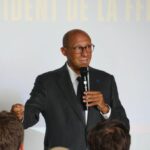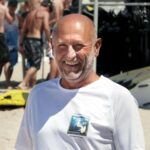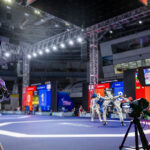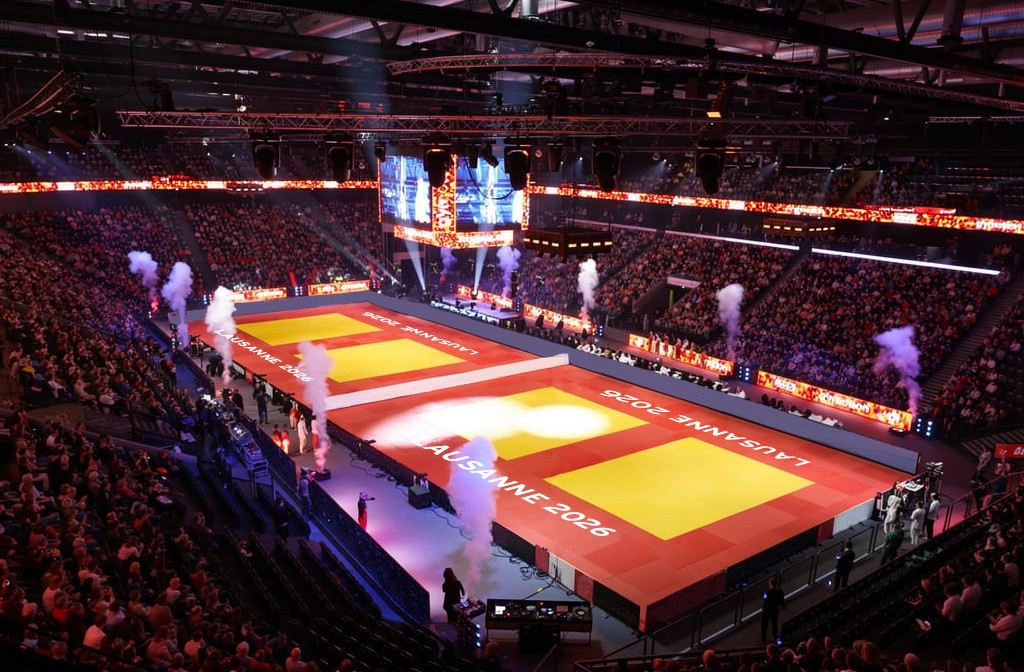
Lausanne has just hosted its first Judo Grand Slam. An innovative event where athletes and para-athletes competed side-by-side. This wasn't a one-off, as the Grand Slam will return to the calendar in 2027 and the Olympic capital will host the World Championships in 2028. Sergei Aschwanden, president of the Swiss Judo and Jiu-Jitsu Federation, and also one of the three Olympic medalists in the history of Swiss judo, shares his thoughts on these exciting prospects with [publication name missing]. Francs Jeux.
What conclusions do you draw from this first Grand Slam in Lausanne?
For a first edition, while acknowledging there are things to improve, the overall assessment is very positive. At this stage, we are the Grand Slam with the most represented nations and the most athletes in the para-events. We have quite remarkable audience ratings. Athlete satisfaction is high. For a first edition, with six months of preparation time to raise the necessary funds to break even, we can say it's a success. But we are also aware that certain aspects will need improvement.
What needs to be improved?
Everything related to transportation and accommodation. We were overwhelmed by the sheer number of athletes, so we had to book additional hotels. Now we know this, so we can take reservations in advance. We're also going to work on three specific hubs to streamline travel. These elements will allow us to reach a higher level. In a country like ours, where you always have to plan ahead, we might need to consider additional resources in certain sectors to have the necessary flexibility in case of unforeseen circumstances. These are things we're already working on for next year.
You chose to make this Grand Slam a unique event in the calendar by incorporating para judo and offering conferences on inclusion and motherhood. Why?
We've always wanted to go beyond elite-level performance sports. Performance and high-level athletes are fundamental, but sport goes beyond the pure aspect of performance. Mandela said that sport has the power to change the world. We're convinced that by integrating athletes with disabilities, we build bridges and connections. We saw how the British team came together to form a single unit. That's the message we want to convey.
Do you think these elements should be part of major sporting events today?
I believe it's important. Para athletes live among us; I don't see any reason to exclude them. Today, there's a greater awareness regarding minorities, racial discrimination, gender discrimination, and so on. We're more focused on integrating everyone now, so we can all live together. The trend is quite positive and will continue in this direction. In any case, we, as organizers, would like to maintain and perpetuate this aspect.
What can we expect for the second edition in 2027? Will there be any new features or adjustments?
We will once again welcome para-athletes; the Grand Slam will remain inclusive. It is important to us to include categories for judokas with visual impairments, who were not represented this year. We are keeping the door open, depending on the number of athletes, to add a day of competition to the para-athletic portion. These elements are on the table for discussion, planning, and ultimately budgeting. We still need to consider other topics; we are still in the analysis phase, but there will certainly be other new features.
Lausanne has also been officially designated as the host of the 2028 World Championships. What does that mean to you?
This is an incredible opportunity, a privilege. The last time the World Judo Championships were held in Lausanne was in 1973, so it will be 55 years ago. This will be the last event before the Games, a qualifying event for the Games, so there's a lot at stake. I think we'll have an extremely high level of competition; everyone will want to accumulate as many points as possible to be well-positioned among the seeded athletes. The stakes will be high, commensurate with the event. We, too, will have to rise to the occasion from an organizational point of view. We have just under two years left, and we're going to work tirelessly to provide the best possible conditions for the athletes so they can perform to the best of their abilities.
At what point did the idea of organizing these World Championships come about?
Between the initial brainstorming sessions with friends at the bar until it finally came to fruition, we're talking about nearly seven years of work, on several levels. This involved everything from the Swiss Judo and Jiu-Jitsu Federation to the cantonal political scene and the city of Lausanne, all to introduce the project, discuss it, analyze it, gain trust, and be challenged – rightly so, because we're talking about a substantial sum. All of this took time. That's both a strength and a weakness of Switzerland: we take our time to do things right. But once we get things approved, we're certain we can move forward.
What do you think allowed Lausanne to stand out?
It's not exactly groundbreaking: it's the Olympic capital, home to nearly 60 international federations. When you have such a sporting cluster, such synergies, such an impact on international sport… I think every international federation is thrilled to be able to showcase its sport to the world of sport and the global sports administration. I believe these factors were enough to convince them, even though we also had to demonstrate our ability to organize a truly successful Grand Slam.
Today, can we say that Lausanne is on the international judo map?
I'm not neutral, but yes, I think we're on the right track to establishing ourselves on the world judo map. I hope we'll stay there for a while.
Switzerland is not a major judo country. The goal with this 2026-2028 period is also to increase your visibility in your country, attract more members, and, in time, achieve even better performance?
It's definitely a medium- to long-term goal. There's a strategy in place to raise awareness of the sport and attract new members. We were fortunate to have 5.300 students at the Grand Slam on Friday, and I hope this will inspire others and encourage many young boys and girls to give it a try. I remain convinced, especially with the young champions we have, that it can inspire others to do the same and develop the sport in Switzerland.
Have you spoken with the athletes about this sequence, which must be very exciting for them?
We hear them talking about it amongst themselves, and I've heard some feedback: it's an incredible opportunity to be able to compete in a Grand Slam right on their doorstep, at least for the athletes from Vaud and French-speaking Switzerland. Having this chance to do so at World Championships that serve as qualifiers for the Games is the icing on the cake. They're going to seize every opportunity. Now it's up to them to work hard and earn their qualification. We've added a certain amount of funding for a two-year development plan. Now it's up to them to give it their all.