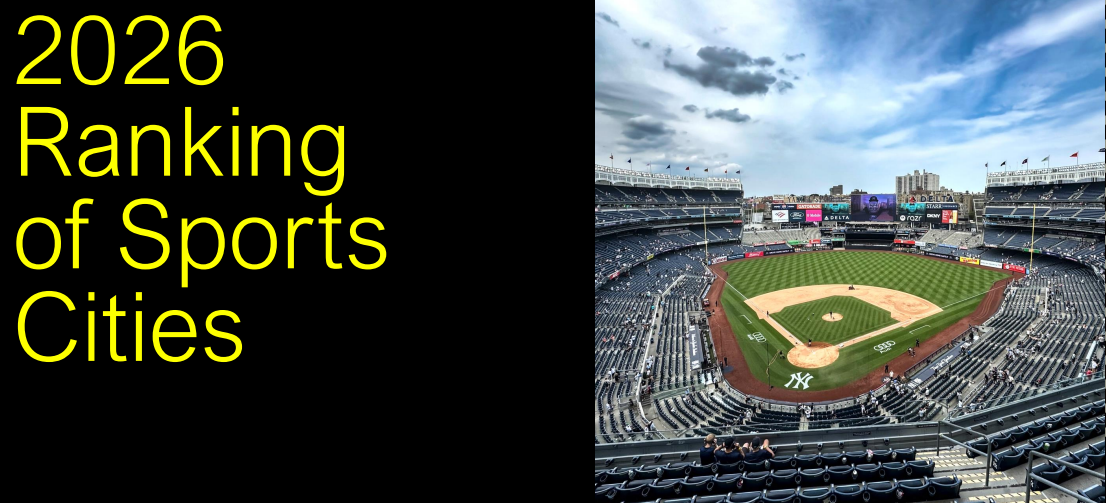
The Burson agency has just unveiled its 2026 ranking of sporting citieswith a new leader: New York, which has ended Paris's reign. What are the key takeaways from this report? Greg Curchod, Burson's co-head of clients for Europe, answers questions from Francs Jeux.
What allowed New York to dethrone Paris?
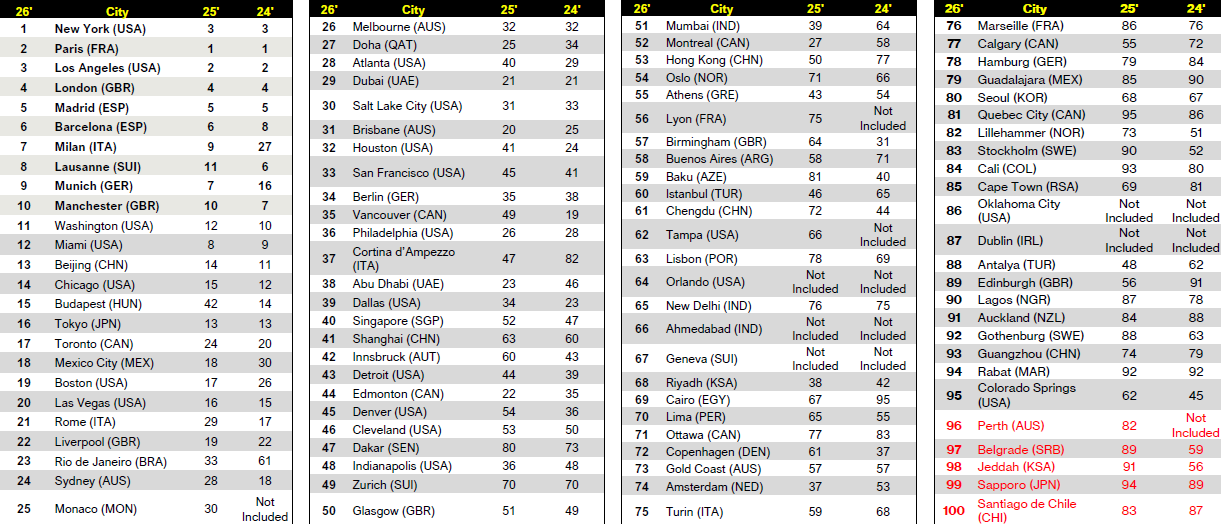
This is less due to a weakening of Paris than to a dynamic New York scene, driven by a very active ecosystem year-round, with major teams in various sports. There's also a perception factor. The questionnaires were open until the end of June, we were in the middle of the World Cup, New York was top of mind and had high visibility. The city benefited from that, but the key takeaway is that New York has a presence throughout the year, with professional teams and events.
Was the points difference between New York and Paris significant?
No, it's still very close. The top five cities are neck and neck, which is why it's difficult to draw any major conclusions about the movements in the top 5.
More generally, what are the main lessons learned from this 2026 vintage?
I think the most interesting thing is that few cities manage to combine both visibility and influence. It's not the cities with the loudest voices that are at the top of the rankings. The opposite is more likely: cities without high visibility but with consistent connections in the sports world perform very well. A striking example is Lausanne, which has relatively low visibility but is active year-round in networking, allowing it to achieve a high ranking. To improve their ranking, it's easier to work on visibility than on influence, which is good news for these cities. Cities with high visibility but little or no influence, like Miami, for example, need to undertake a long-term effort. Today, it's better to be strong in terms of influence and somewhat weaker in terms of visibility because that's where rankings can be more easily achieved.
How many truly succeed in combining visibility and influence?
Five cities stand out in particular for their ability to simultaneously rank among the best in terms of influence on sports stakeholders, media visibility, and presence in online conversations: New York, Paris, Los Angeles, London, and Madrid. They all occupy a place in the top five of the overall ranking and also feature among the highest-ranked cities in the influence and visibility indicators. This convergence is probably not a coincidence. These cities embody several attributes that shape sporting power today: hosting major international events, the presence of influential economic and media players, a recognized sporting heritage, and the capacity to generate global conversations.
It appears that the FIFA World Cup has had a rather uneven impact on the host cities.
The cities that improved the most were those with the most to gain, those that were in the middle or at the bottom of the rankings: Vancouver, San Francisco, Atlanta, Houston, Toronto, Guadalajara… Those that were already quite high up, like New York and Los Angeles, saw less progress. Some even slipped: Philadelphia, Miami, Dallas. We stopped the questionnaire at the end of June, so we couldn't fully account for the impact of the World Cup, but we can see that the tournament had a significant effect on the cities that had the most to gain and could improve.
We are seeing a spectacular rise in Dakar's rankings, which has entered the top 50 even before the Youth Olympic Games. How do you explain this?
This shows that the city is gaining reputation even before the competition and that it knows how to leverage the preparation phase. There's a festival every summer, Dakar en Jeux, which has been running for four years. The city has skillfully managed its efforts with influencer announcements, government initiatives, and so on. These are the cities that know how to occupy the space before events by maximizing the pre-legacyThe pre-event legacy benefits the rankings. Paris did this very well too. The IOC strongly encourages pre-Games programs, which allow for a much stronger impact. In terms of international visibility, interest grows before the Games, during the Games, and then declines very quickly.
France has three cities in the ranking, and will add a fourth, Nice, in 2027. Is that a great achievement?
Lyon gained 19 places, Marseille 10. It's difficult to explain; the sports professionals we speak to have discussions with cities that we aren't aware of. There are sometimes preliminary exchanges about future bids, which can explain some of the shifts. In any case, generally speaking, France is doing well. Respondents chose Nice as one of the five cities that will be included in the ranking in 2027. It received a lot of attention in the context of the 2030 Winter Games. There's an element of perception in the ranking, so I think Nice benefited from the buzz surrounding the Olympics, even though it ended negatively. Nice received much more international sports coverage this year, which gave it greater visibility.