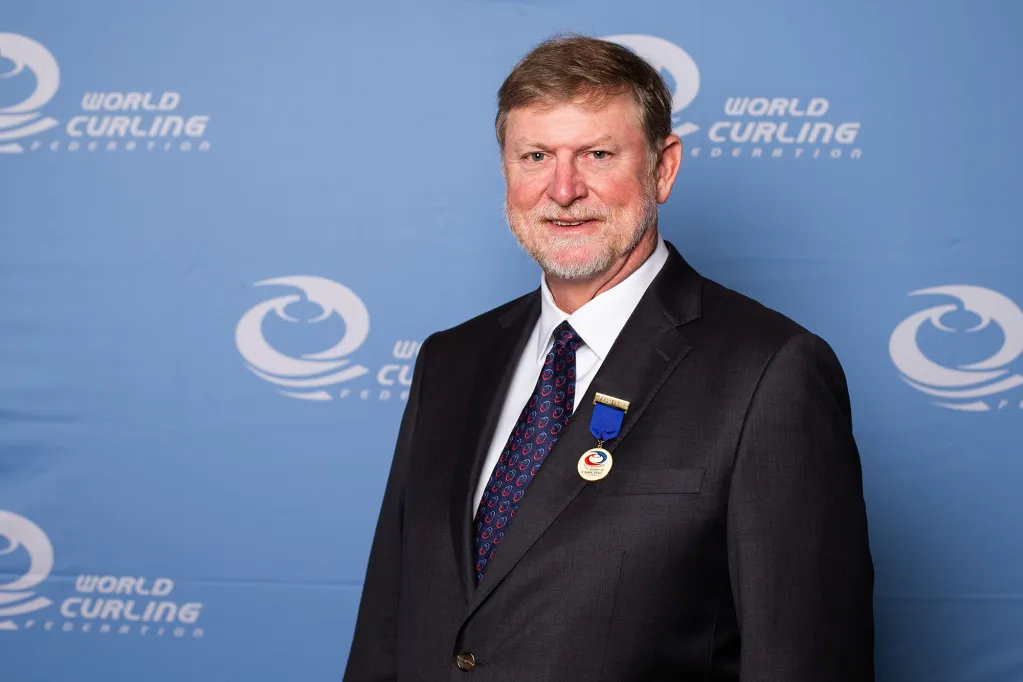
Elected head of World Curling in September 2022, Beau Welling is preparing to experience his first Winter Olympics in this role. The executive speaks to Francs Jeux On the eve of this great event, where his sport will occupy a privileged place: curling will open these Games, from Wednesday February 4, and will be on the program every day until Sunday 22.
How are you feeling a few days before your first Games as president of World Curling?
I'm beyond excited! I've been waiting for this moment for so long. I'll arrive in Milan on February 1st, participate in the IOC meetings, and attend the opening ceremony. Then, I'll arrive in Cortina on February 7th and stay there until the end.
What do you think of the competition venue?
It's a fantastic place, steeped in history. It's a superb arena; we'll have some magnificent images on television. We already held our test event here, the Junior World Championships, and we saw what a magnificent venue it is. It's a stadium that's been featured in a James Bond film, which is pretty cool. In fact, this place embodies the past, present, and future all at once. It's going to be really great. Cortina is also a special place; we have every reason to be excited.
Is opening the Games a real opportunity for the visibility of curling?
It's crucial. Every four years, we have this opportunity to reach the entire world. This is partly because we're the first sport in the program, but it's also because we have competitions every day. People will be able to watch curling two days before the opening ceremony, and every day until the closing ceremony. We're the sport with the most competition time. This is a major lever for our sport, for reaching new audiences. I come from the United States, from a place where there's no curling, but I was fascinated when I saw footage of Calgary 1988. It's a huge asset for growing our sport. We feel a responsibility to the Olympic Movement and the Olympic family to offer a great competition, with fantastic athletes.
What makes curling unmissable?
It's a sport that's both simple and complex. It's sometimes summed up as a game of chess on ice; it's a very strategic sport and very interesting to watch. It's accessible because anyone can imagine playing it, which isn't the case with bobsleigh or other disciplines. It's a sport that can be practiced at any age, like golf, whether you're very young or old. All of this makes it really appealing when you see it on television.
Should we expect any new developments at these Games?
In terms of broadcasting, yes. There will be changes in how curling is presented, with more data and information offered to viewers. This will make the sport even more interesting. The more understandable our sport is, the better. The public is increasingly hungry for data and statistics, and we'll be able to offer them even more.
Curling will regain its audience; that's also a significant factor.
Curling, by definition, is a sport of camaraderie and brotherhood. Generally, the two teams get together for a drink afterward and socialize. This is also reflected in the stands with a friendly atmosphere. There were many constraints in Beijing. This time, with all the sliding sports, we'll have a very festive atmosphere in the village. The Olympics are about camaraderie, sharing with others, and that's in the DNA of our sport.
For the third time, mixed doubles will be on the program. What does this competition offer?
It's a much faster and more dynamic style of curling. The matches are shorter, which encourages a more offensive approach. It's a great product for television, very exciting. It's perfect for launching the Games and captivating the audience. It also allows countries to make a name for themselves, for example Estonia, which has a good chance of winning a medal in its first appearance. We've learned a lot from mixed doubles; it gives us ideas for improving traditional curling. From every point of view, it's a fantastic addition for us.
Curling has a quota of 120 athletes. Is that satisfactory, or do you hope for more in the future?
Every sport wants more, of course. We too would love to have more athletes and more countries competing. Since mixed doubles is faster, perhaps a day will come when we have more athletes and countries participating in this competition. (Eight countries were involved in 2018; they have been ten since Beijing 2022, editor's note)That's a possibility.