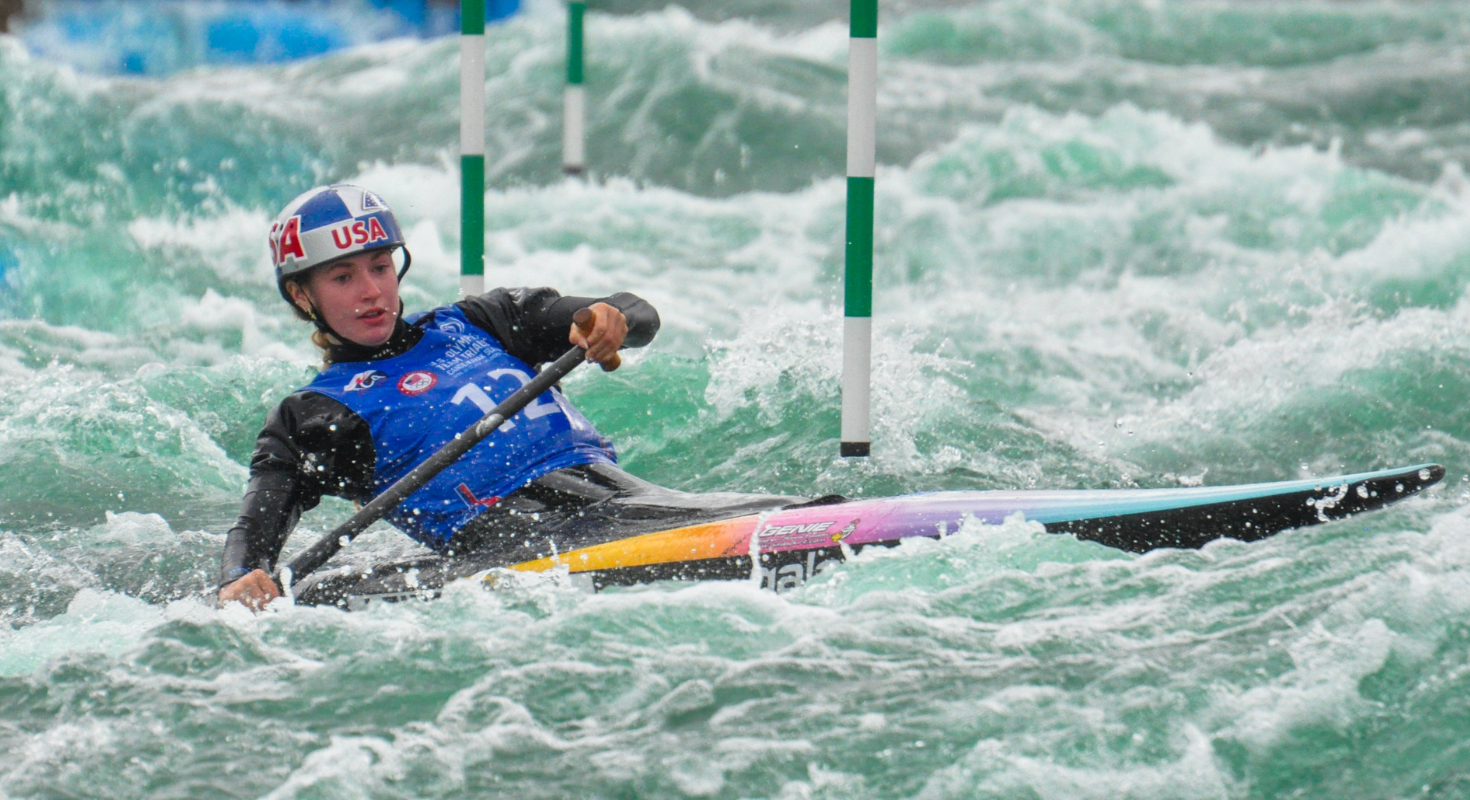
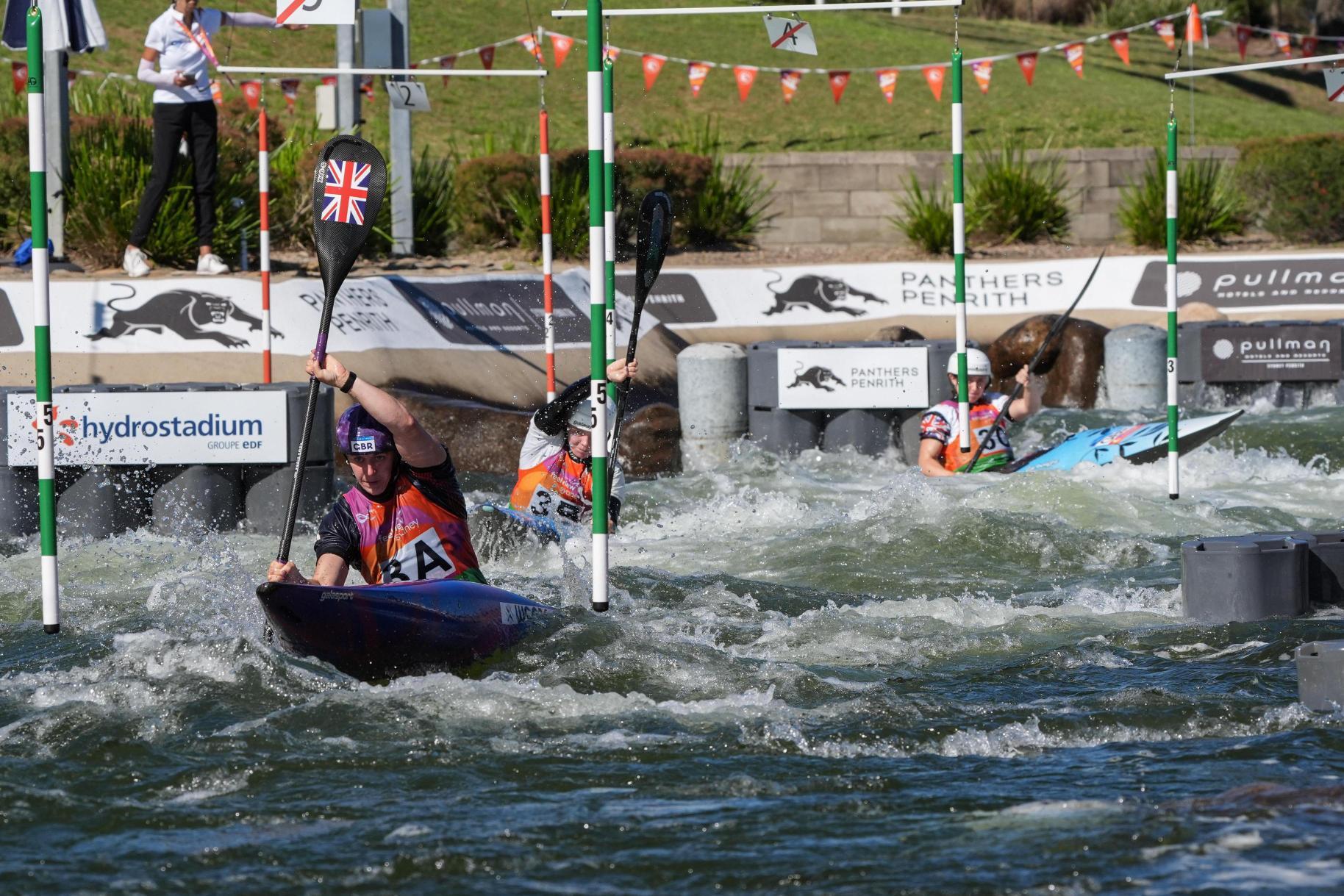
The scent of Los Angeles 2028 is slowly beginning to spread through Oklahoma City. In two and a half years, OKC will host the softball tournament and the canoe slalom events of the Games. The whitewater stadium will even get a dress rehearsal this summer with the World Championships, from July 20 to 25. This will give more than 300 athletes the opportunity to familiarize themselves with the venue, which is currently undergoing crucial improvements orchestrated by the French company Hydrostadium.
New obstacles for a new life
Opened in May 2016, the Oklahoma Riversport whitewater stadium has already hosted the US Olympic trials for slalom (2016 and 2024) and kayak cross (2024), as well as numerous national and international competitions. However, given the upcoming deadlines, the stadium needed an upgrade. The major change is the replacement of the mobile obstacle system, which was beginning to deteriorate., explains Félix Bouvet, multiple world medalist and head of whitewater activities at Hydrostadium. We're also working on the equipment for the second arm. It wasn't equipped, so we're installing posts, cables, and slalom gates—everything needed for competitions. We have other tasks: helping to resolve a turbulence issue at the pumping station outlet, which makes the entire starting area a bit choppy; installing two roof-mounted gates at the entrance to each arm to regulate the flow and allow for the creation of a surf wave; and finally, setting up a kayak cross ramp. »
Richard Fox, chairman of the ICF slalom commission, is enthusiastic when discussing the development of this stadium. Modernizing the obstacles will allow for a more flexible approach. Ultimately, we will have a course that can be adapted for Olympic-level competitions, but also for recreational needs. This is essential for the center's appeal. “,” he tells us. The new obstacles and the kayak cross ramp will be operational by March, just in time for the ICF Ranking event (March 27-29). These improvements will also allow the Whitewater Center to optimize its energy consumption.
« Currently, without a roof valve, if we want to put 10 cubic meters of water into the rafting section, the competition section takes in some of it because we can't close it. To get 10 cubic meters into the rafting section, we have to turn on five pumps and pump 25 cubic meters. We end up with three pumps running unnecessarily. The valves will prevent wasting flow in a section that doesn't need to be supplied. We'll be able to get the entire 10 cubic meters into the rafting section. From the initial design phase, Hydrostadium incorporates a valve system to control and reduce the environmental impact of whitewater courses, drawing on its expertise in hydroelectric power. The installed obstacles are manufactured in France, using 40% recycled materials, and can remain on site for approximately twenty years. All these elements will ensure a lasting legacy for Oklahoma City.
Stadiums that bring "added value to the community"
Hydrostadium has several former high-level athletes on its staff to develop a more comprehensive vision for its projects. It made a name for itself in the canoe-kayak world by working with Sydney 2000, Athens 2004, Beijing 2008, and by contributing its expertise to the Vaires-sur-Marne site during the Paris 2024 Games. It was the preferred partner of last year's World Championships in Penrith, at the 2000 Olympic site, which truly launched Hydrostadium's history. This venue was designed for the Olympic Games, at a reasonable cost, and it's still one of the best in the world 25 years later. It's a huge legacy. " Richard Fox is delighted.
The French company, a subsidiary of EDF, is also working on a stadium project in Perth with the Australian federation. It is therefore perfectly logical that it is now looking towards Brisbane 2032. We have a special historical link with Australia, and...'This is a meaningful project, symbolically, in terms of sporting merit and its sustainability. We have a history with Olympism that we intend to cultivate.' “,” confirms CEO Stanislas Lequiller. The Australian organizing committee has already expressed its desire for a simple whitewater stadium compatible with different uses. This philosophy suits us well; it's the stadium model we're promoting and have implemented, for example, in Cesson-Sévigné or Épinal, two sites that have hosted French Championships and major competitions.Stanislas Lequiller continuesStadiums that meet sporting needs, of course, but also bring added value to the community with electricity production, respect for ecological continuity for fish in the river, a training area for firefighters, school use… That is what we aim for. »
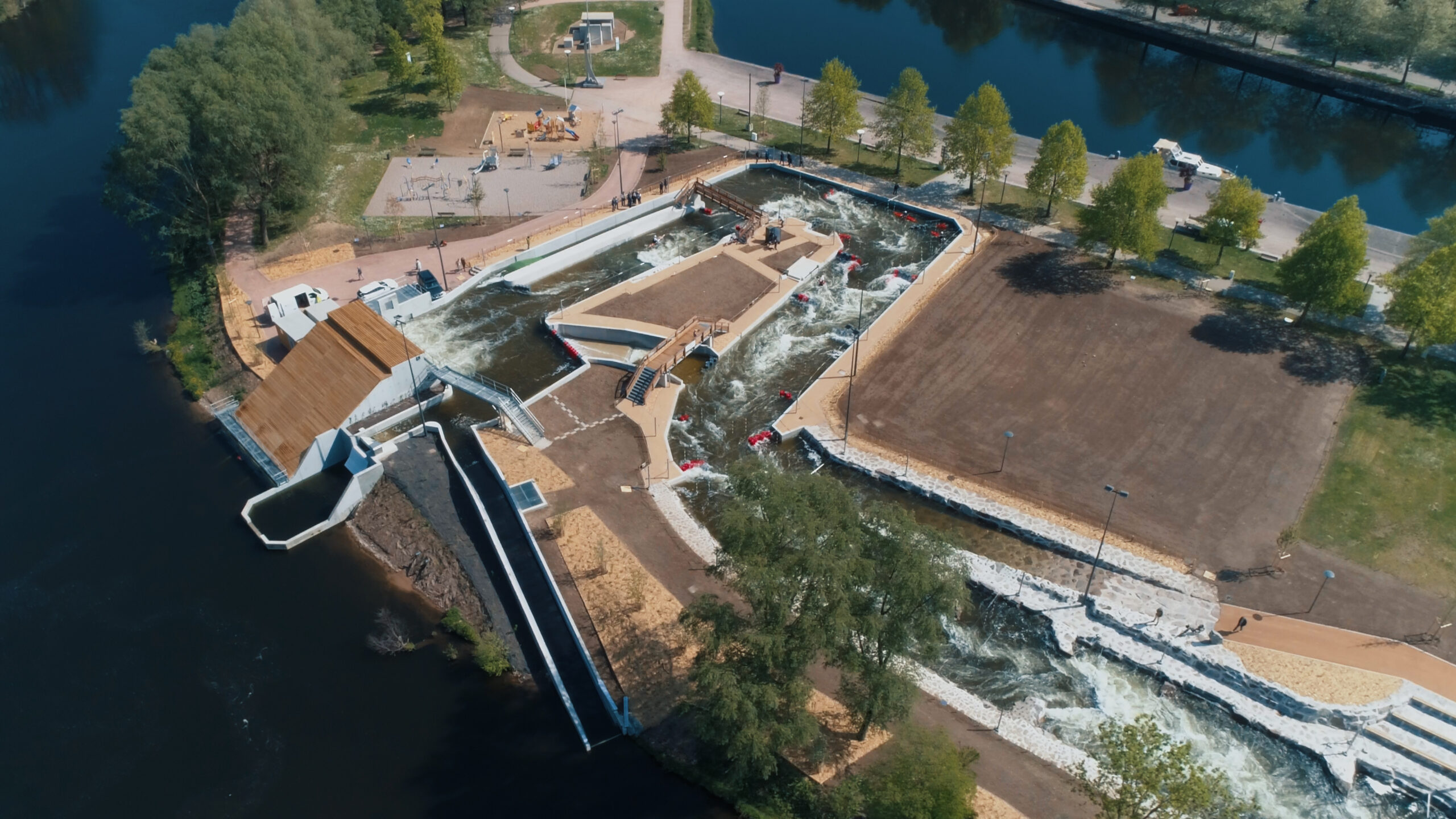
Aerial view of the Epinal stadium.
Richard Fox logically agrees with this point of view: Canoe slalom is a niche activity, and it's not enough to sustain the operation of such sites. We're seeing more and more facilities that integrate community needs through emergency services training, recreational activities, rafting, and more. This is the right direction. This holistic vision is truly important to maximize social benefits. “As President Thomas Konietzko points out, whitewater stadiums have shown that they can…” to facilitate economic growth, social cohesion and environmental protection This leads to a conviction in the face of current challenges: Our sport, and whitewater stadiums, are well placed to play a modest but significant role in the search for solutions. »