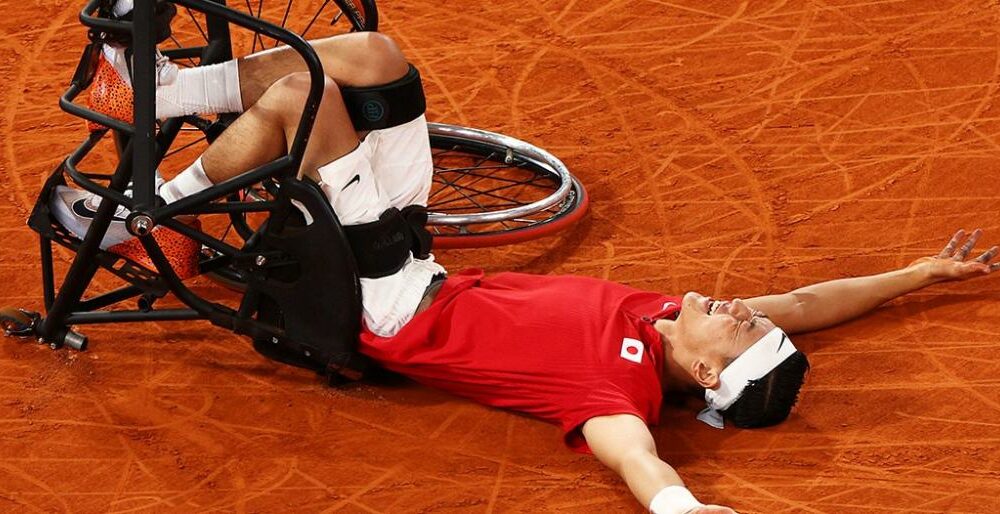
France celebrated the third edition of Paralympic Day on Saturday: initiations, demonstrations, parade of athletes, concerts... The celebration took place in a particular context due to budget cuts. incomprehensible, unjust and dangerous » said the French Paralympic and Sports CommitteeInterview with Gaël Rivière, Paralympic blind football champion and president of the French Paralympic Federation, on the mixed legacy of the Paris 2024 Paralympic Games.
Why is celebrating the Games, like on Paralympic Day, important?
Thanks to the Games, a bond has been forged between our athletes and the general public. Many of our athletes have earned a small place in the collective sporting imagination of the French; it's an opportunity to reconnect with the public, to exchange ideas, and to continue to raise awareness about disabled and parasport. The legacy of the Games is constantly being built. We must not simply live in memories; we must continue to write new pages.
You have nearly 30.000 members. Have you noticed a Paris 2024 effect?
Yes, it's quite remarkable. In the Paralympic disciplines, we've seen an increase of between 5 and 30%. Blind football is up 17%, goalball is up 30%, and table tennis is up 5%. We've seen some really substantial increases. There's even been an impact on winter disciplines, which have increased by 27%. We've been making steady progress for several years, and the Games are part of that trend.
Beyond this increase in the number of licensees, how do you judge the legacy of these Games?
The legacy is mixed. I personally prefer to think of the glass as half full rather than half empty, so I want to remember two things: a tangible legacy with the construction of more accessible infrastructure – still insufficient in number, but a movement has been initiated. The challenge is to continue it. There is also an intangible legacy: thanks to the Games, we were able to show that people with disabilities possessed abilities and skills, sometimes extraordinary. The challenge for us is to continue to spread this message of the skills of people with disabilities, both on the field and in management. The Games helped change perceptions of people with disabilities. Thanks to the Games, thanks to sport, we managed to shake up these prejudices by showing that people with disabilities could possess abilities and skills.
You often say that we have moved “from compassion to passion.”
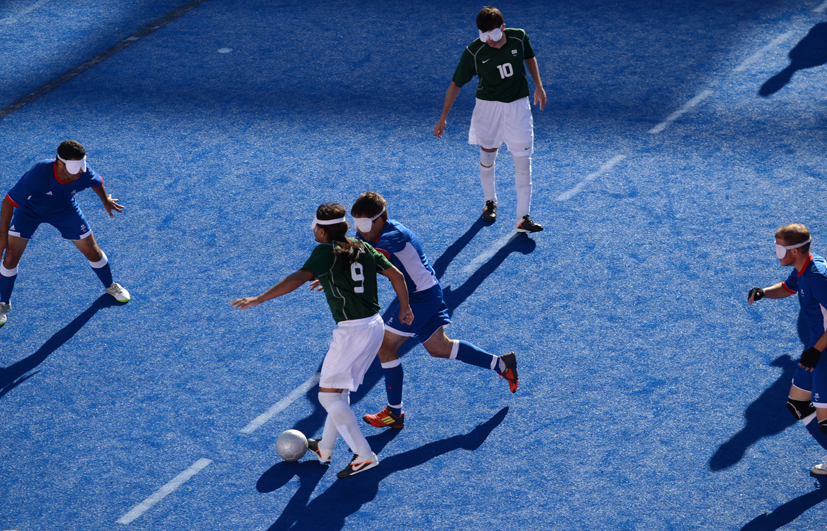
That's exactly it. The strength of sport is that people leave the stadium as passionate, ardent supporters. It's a great success of the Paralympic Games. How many people I meet who tell me they were moved, overwhelmed, stunned by the blind football final. People tell me they were at a wedding and fifteen of them gathered around a phone to watch the penalty shootout... The sporting emotion has replaced a kind of compassionate attitude that can sometimes exist towards people with disabilities.
What about the exposure of parasport today?
Before the Games, there was nothing, or almost nothing. The media are now more interested in the Paralympics. France TV broadcast a blind football championship match, beIN Sports recently broadcast wheelchair football… There is progress. On the other hand, we can only regret that parasport does not occupy an even greater place on television and in the media. We are not at the level we hope to be, there is a broadcasting deficit, but we demonstrated during the Games that our disciplines could interest the public. We are on the right track.
How have your financial resources evolved?
Our budget has remained within a similar scope. We remain attentive to what we hear about the state budget, because we depend substantially on public funds. The signals are not very clear, even worrying. We have work to do with private partners. We are convinced that parasport carries values that are of economic interest to more private partners. Riding the wave of the Games also means trying to catch an economic wave to take a step forward in supporting our federation and our athletes with private resources.
Do you feel that companies are more sensitive to parasport?
We feel a growing interest, yes, despite the economic climate. We feel that disabled sport is of interest to partners, who say that boccia or blind football can be instruments for internal cohesion, publicity, economic performance, etc. The only regret is that if the economic environment had been more favorable, this enthusiasm would have been even greater.