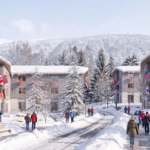

A village for athletes and by athletes. This is, in essence, the promise of the OCOG Paris 2024 to the delegations who will take up residence in the French capital for the Olympic and then Paralympic Games. The French organizers, never short of superlatives, announce the unprecedented and the unequaled for the athletes' village. A habit.
Credible? The following will answer. But a month and a few days before the opening of the Olympic Games, the picture looks good. The COJO revealed the details to the media, like a remote guided tour, in images and figures if not real and pedestrian. A form of trailer of which here are the main points.
The genesis, first. Brice Guyart, the former fencer who joined the COJO as responsible for mobilizing athletes and the sports movement, explained it: a Paris 2024 team went in 2019 to the IOC Athletes' Forum in Lausanne. The idea: consult Olympians from different sports and countries to discover their expectations, their desires, even their ideas, for the Olympic and Paralympic village.
«We distributed 200 questionnaires and carried out 53 individual interviews”, recalls the Olympic individual foil champion at the Athens Games in 2004. On returning from Lausanne, the Parisian team examines the results of its consultation. Not all proposals are accepted, but they serve as a working basis for the COJO and its Athletes' Commission.
The numbers now. They are imposing, as is often the case at the Olympic Games, where the superficial refusal of gigantism never prevents from always thinking a little bigger. For the Olympic Games, where 206 delegations are expected, the village will have 14.250 beds. For the Paralympic Games, where participation is a little smaller (182 countries), it will offer 9.000. Tenants will be housed in 3.000 one- to four-bedroom apartments, accommodating between 4 and 8 people.
The residence area will be equipped with 345.000 pieces of furniture. Laurent Michaud, its director, explains it: “ We collected the keys on March 1st. All the beds are now set up. The furniture arrangement is in progress"
Still in the numbers section: 8200 fans, 5535 sofas, 40.000 meals served daily in the main restaurant, a 3200-seat space open night and day without interruption. A polyclinic capable of carrying out up to 700 consultations per day. For the Paralympic Games, a technical center where 2000 repairs can be carried out, from the most basic to the most sophisticated. A bus station with 55 bus bays, with a frequency of up to 150 buses per hour. A 3000 m2 fitness center equipped with 350 machines. Massive.
The new stuff, finally. Determined to the point of obsession to leave its mark on the history of the Games, the OCOG sprinkled the village with it. Some are quite anecdotal, such as the presence of a tattoo artist in the international zone, a brass band to accompany moments of celebration, or even yoga classes offered to athletes and their support.
More decisive, the installation within the village of official training sites for seven Olympic sports: modern pentathlon, handball, fencing, basketball, weightlifting, wrestling and breaking.
Also new is the installation of a village club, a vast space of 800 m2 presented by the COJO as a place of entertainment, relaxation and conviviality. On the evening of the opening ceremony, Friday July 26, a large screen and a catering offer will allow athletes who were unable, or unwilling, to participate in the parade on the Seine to still experience the evening remotely.
Finally, the OCOG is already announcing a departure system for delegations intended to avoid the usual traffic jam at the airport. No less than 98 registration banks are planned within the village itself. According to estimates, around 7.000 athletes will leave Paris on Monday August 12, the day after the closing ceremony.