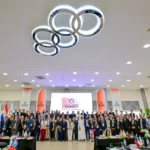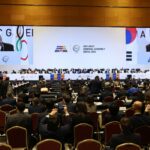

Anything but coincidence: the World Anti-Doping Agency (WADA) is hosting its World Education Conference this year in the south of France. It begins this Tuesday February 27 (until Thursday 29) in Cannes. Less than five months before the opening of the Paris 2024 Games.
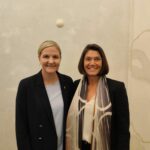
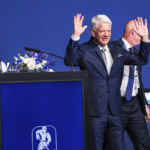
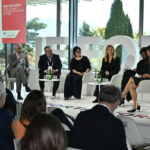
At the top of the list of speakers, Kady Kanouté (photo below). The former international basketball player of Malian origin, who lived in France for a long time, chairs the WADA Education committee. She answered questions from FrancsJeux.
FrancsJeux : Today, who should be educated as a priority in the rules and realities of the fight against doping? Athletes, coaches, officials...?
Kady Kanouté : Everyone. Since 2021, an education standard has been included in the World Anti-Doping Code. It targets athletes, but also those around them: coaches, doctors, parents... All people who can have a direct influence on the athlete's decision-making. We start from the lowest level, recreational sport, to the top, the high level.
Who are most affected?
The athlete remains at the heart of the system. But nothing could work without educating those around him.
Are prevention and education two different things?
Yes. Education is broader than prevention. It concerns all aspects of the issue: regulations, testing procedures, sanctions, obtaining results... An athlete must be supported throughout the process. Their education in the fight against doping must be continuous, at all stages of their career.
In reality, are there significant differences in terms of education between sports and countries?
Of course. Education requires means and resources. They are not equally distributed across all geographic areas. Northern countries most often have greater resources than those of the South, particularly Africa. But the point of having established a standard, and having integrated it into the World Anti-Doping Code, is precisely to oblige countries to find means and resources to set up a basic education program. Differences also exist, of course, between sports. The number of infractions is not the same between members of the top 10 – athletics and weightlifting, for example – and less exposed disciplines.
Is the new generation of athletes better educated on the issue of doping?
I think so. The establishment of standards played a big role. We have seen significant progress. The number of frauds is decreasing. Athletes are becoming more and more involved. At the initiative of WADA, they are putting themselves forward to play a role, some have even become ambassadors for the fight against doping. We are often asked to justify spending on education programs. To answer, we would like to be able to establish a direct link between the drop in the number of offenses and the most advanced programs. But it's not always that simple.
Athletes still often plead ignorance in their defense in the event of a positive doping test. Today, is this really a credible argument?
Of course. Assuming that the vast majority of athletes embark on a high-level career without the slightest intention of doping, we can understand that doping issues are not their first concern. I can speak about it personally, because I was tested for the first time at the Beijing 2008 Games. At the time, I knew almost nothing about the rules and their complexity. This experience was a trigger, it made me want to get involved in these issues. Even today, athletes sometimes get caught up in the system. But it's important to hear what they have to say. All the work we do, with these education programs, aims to ensure that they can no longer say that they did not know.
Why did you choose “Let’s cultivate our collective creativity” as the theme of the world conference on education, organized from this Tuesday, February 27 in Cannes?
The reality, even today, is that means and resources are not identical from one country to another. But it is very important to find local solutions to protect athletes against doping. We will give educators and organizations concrete, very practical tools that they can implement locally, taking into account their context and their specificities.