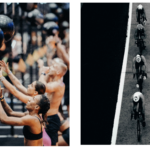
The event promises to be a decisive step in Olympic history: the Paris 2024 Games will be the first where gender parity will be respected both in terms of participation and medals distributed. The Moroccan Nawal El Moutawakel, member of the IOC Executive Board, the first Arab and African woman to have won an Olympic gold medal, in the 400m hurdles in Los Angeles in 1984, explains it in this column for FrancsJeux : the road has been long. But it is not finished.
“The 1984 Summer Olympics in Los Angeles marked a turning point in my life, since it was on that occasion that I became the first Arab and African woman Olympic champion. This victory was a source of pride not only for me, but also for many young girls and women around the world, who felt galvanized and motivated by this success.
However, it was with excitement that I approached this race because the night before, all eyes were on me. I was the only female athlete in the entire Moroccan delegation and I was in the final of the 400m hurdles… An event which was making its debut on the Olympic program for women during this same edition of the Games.
Forty years later, it is as a member of the International Olympic Committee (IOC) that I will attend the Paris 2024 Olympic Games. For the first time in history, I will be the privileged witness of the parity which will be at these Games, which will welcome exactly the same number of competitors.
How long the road we had to travel was! In 1924, only 5% of competing athletes were women. In Los Angeles, we represented 23% of the athletes competing. However, thanks to the growing commitment of the IOC, these figures have continued to increase to reach almost 49% women among the approximately 11 athletes present at the Olympic Games Tokyo 000. In Paris, we will reach the much desired parity: 2020% women and 50% men.
What's more, by changing its rules, the IOC put gender equality in the spotlight during the opening ceremony, not only by allowing, but also strongly encouraging each delegation to have two flag bearers parading side by side – a woman and a man.
The Olympic Games are one of those rare occasions where female athletes can make headlines in the same way as their male counterparts. We know that at each edition of the Olympic Games, there are special broadcast times. We have therefore adapted the sports calendar so that an equal number of women's and men's events (with medals awarded) and competition times take place during these time slots.
Paris will be the pride of the Olympic Movement – Paris will be the culmination of the hard work put in by the IOC, the International Sports Federations, the National Olympic Committees, the organizers and, of course, the athletes. These Games will represent the pinnacle of our strategic commitment to gender equality. But the finish line is still far away.
Building on this extraordinary progress, we are now encouraging our stakeholders to take an interest in what is happening outside the competition area, where the situation of coaches requires much more attention. Over the past ten years, only 10% of coaches at the Olympics were women. And this figure has hardly increased.
But coaches are prominent and influential decision-makers. Women and young girls need to see female coaches in order to understand that they too can hold positions of responsibility. We need women coaches for the same reasons businesses need women at the highest decision-making level. It is on the ground that we must tackle this challenge. This will take time as coaches generally have to serve between 10 and 12 years at the national level before progressing to the Olympic level. It takes longer to become a coach than an elite athlete.
Although the IOC is not directly involved in the choice of coaches at the Olympic Games, it is committed to meeting this challenge and helping its stakeholders to provide more women with the opportunity to reach the highest level of the Olympic Games. sports supervision. The Women in Sport High-Performance Pathway (WISH) program is a key part of the Olympic Movement’s response; Thanks to this ever-expanding program, more than 100 women, from more than 50 countries and representing 17 sports, have been trained as high-level coaches.
Of course, many other challenges await us. As with the athletes whose interests we defend, success is not always immediate. It takes time, effort, courage and tenacity. We must now ensure that this progress towards parity at the Paris 2024 Games translates into lasting change. »