
The big spring cleaning has started in Olympic boxing. He spares no one. The world body of the discipline, the IBA, announces in a press release that it has removed a group of seven countries from the list of its national federations. A first skimming. It shouldn't be the last.
A first quartet of nations, including three Europeans, disappeared from the IBA family: New Zealand, Germany, Sweden and the Netherlands. They are accused of having “ found guilty of violations of rules and regulations. of the international body. In short, wanting to join a “ rogue organization”, understand World Boxing, the new international federation breakaway from the IBA, officially created last month.
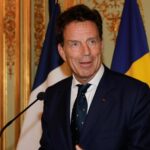
The IBA specifies this in a press release: the four excluded were given the opportunity to make themselves heard. They would not have used it, just as they would have refused to distance themselves from World Boxing. An assertion contested by Boris van der Vorst, the president of the Dutch federation, the only rival of the Russian Umar Kremlev during the last elections for the presidency of the IBA. The Dutchman assures that he could not be heard before the announcement of the sanction against his federation.
Another national federation, that of the Czech Republic, is also removed from the scene. The IBA notified him of his suspension for very comparable reasons, his indirect links with World Boxing. The Czech Republic recently organized an international tournament, called Grand Prix, where American boxers and officials were allowed. Problem: the United States was the first to cut ties with the IBA, officially leave the body and join World Boxing.
Finally, two other national federations, Liberia and Equatorial Guinea, are also leaving. This time, their banning does not concern World Boxing. It is motivated by a breach of the statutes and regulations of the IBA. The two countries have not submitted their annual report to the international body, an obligation written in black and white in the documents signed by the member countries.
Two other countries, Ireland and Iceland, risked the same sanction, for not having transmitted their annual report either. But they avoided the ax by sending it late.
With the already official, but perfectly voluntary, departure of the United States, the IBA therefore has eight countries removed from its lists. The skimming could soon continue, particularly among other nations involved in the creation of World Boxing, including the Philippines and Great Britain.
For boxers, the blur continues to thicken. But Boris van der Vorst repeats it tirelessly: the creation of World Boxing, then the sanctions imposed against dissident countries, will have no direct impact on their Olympic career. At least in the short term.
The IOC had decided even before the Tokyo 2020 Games: the IBA (then named AIBA) is no longer in charge of boxing at the Olympic Games. For Paris 2024, the Olympic body stripped it of the qualification process and the final tournament.
Athletes from the seven excluded countries can therefore continue to consider participation in the next Summer Games. Germans, Swedes, Dutch and Czechs will be able to compete in the 2023 European Games in Poland (June 21 to July 2), a competition included in the qualification process for the Paris 2024 Games. The IBA will not be in charge. She is even excluded.
In the longer term, nothing is less certain. Will the IBA find favor again in the eyes of the IOC? Unlikely. Will World Boxing be recognized and endorsed by the Olympic body? Possible, but not certain. The IOC will at least wait until its first elections, announced for the fall, are held before showing its support or recognition.
In the meantime, boxing remains excluded from the program for the Los Angeles 2028 Games. A program whose final version is supposed to be validated by the next IOC session, in October in Mumbai.