
The event has become unmissable. Since its creation in 1997, the International Festival of Extreme Sports (FISE) brings together the world elite and fans of urban disciplines every year in Montpellier.
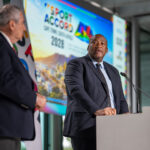
At the initiative of its organizer, the Hurricane group - member of the GIE France Sport Expertise -, the meeting is now accompanied by a forum, the Urban Sports Summit. The 2023 edition begins this Wednesday, May 17 in Montpellier, in parallel with FISE (May 17 to 21). Two IOC envoys are announced among the speakers, Kit McConnell, the sports director, and Leandro Larrosa, his counterpart in digital engagement and marketing.
Two years after the Tokyo 2020 Games, where skateboarding, 3×3 basketball and climbing made their entry into the Olympic program, how are urban sports doing? Hervé André-Benoît, the general director of the Hurricane group and founder of FISE, answered questions from FrancsJeux.
FrancsJeux : How is the world of urban sports doing, almost two years after the Tokyo 2020 Games and less than 500 days before the Paris 2024 Games?
Hervé André-Benoît : Since their appearance in the 70s, urban sports have continued to progress. Originally, they were presented as unorganized activities, but they came together, particularly around events. The creation of events, like FISE, was the driving force behind their development. Infrastructure followed. They still often remain insufficient to meet demand, but communities have invested in the creation of spaces dedicated to urban sports. In France, they are full all the time. The number of practitioners increases every year, almost everywhere in the world. The practice often remains free, away from federations. As for the economic market, it has never been so dynamic. The health crisis has caused equipment sales to explode. Today, many brands communicate on these disciplines, even without belonging to the world of urban sports.
Has the market reached maturity?
No not yet. It continues to develop year after year, without slowing down. For 10 or 15 years, the practice of urban disciplines has gone beyond the sole framework of sport. It is the reflection of a way of life. When the market reaches maturity, urban sports will not be far from competing with football.
What are the geopolitics of urban sports today?
The United States has long been the undisputed market leader. They initiated the phenomenon in the 70s and largely contributed to publicizing it, notably via the X-Games. Today, Europe has made up a large part of its gap. It follows very closely, with practitioners of all ages, between 4 and 40/45 years old. European riders are getting stronger and stronger. In recent years, we have observed an enormous appetite from the Asian continent. In China, in particular, the potential of practitioners is considerable. The Chinese BMX team has great potential for Olympic medals. Asia is overtaking Europe in terms of infrastructure. This will definitely have an impact on the results. Africa remains behind. Young people are very demanding, but the equipment is not keeping up. The 2026 Youth Games in Senegal can serve as a trigger.
What was the impact of the Tokyo 2020 Games, where several urban sports made their debut in the program, including skateboarding and 3x3 basketball?
Participation was at a very high level, in line with expectations, and the infrastructure was of high quality. But the absence of an audience lessened the impact of the event. Without the osmosis between athletes and spectators, very important in these disciplines, the Tokyo 2020 Games lacked strength and energy. We were expecting an explosion, but it didn't happen. But the Games had a strong impact in Tokyo and Japan, where the market experienced strong growth.
Is a gap widening between Olympic urban sports and others?
Entering the Games is recognition. The IOC not only chooses the sports of today, but also those of tomorrow. The Olympic label also ensures greater media coverage, and therefore greater resources. But in the world of urban sports, we all move forward together. Roller skating was a leader for a long time, then it declined. Today, it is supported by stronger growing disciplines. The competition is not between urban sports, where there are many common denominators, but between urban sports and other sports, such as tennis or football.
Can the Paris 2024 Games mark a turning point?
An accelerator, certainly, but not a turning point, because it would mean a change of direction. The impact of the Paris 2024 Games promises to be enormous. They will give rise to desires and vocations. There will be more participants, and with them the media and sponsors. Despite their popularity, urban sports and riders need better exposure. The Paris 2024 Games can bring it to them. The OCOG will offer them a setting, the Place de la Concorde (breaking, 3×3 basketball, skateboarding and BMX freestyle). The organizers have a real desire to do the best for these new disciplines. As for the IOC, it announced last year the launch of a series of Olympic qualifying events in climbing, breaking, BMX freestyle and skateboarding, in the form of four-day festivals. It's a sign. Not all sports have this privilege.