
The door is open to them. At least in theory. But, in practice, entry into international competitions turns out to be more complex than expected for Russian fencers.
Since the vote of the International Fencing Federation (FIE), on March 10, in favor of a return of Russian and Belarusian athletes from this month of April, for the start of the qualification period for the Games of Paris 2024, it is now possible for them to regain their place on the international circuit. But it remains difficult to say with certainty that Russian fencers will really advance to a stage of the World Cup.
The Russian Fencing Federation announced on Sunday April 2, through its president, Ilgar Mamedov: it will not send any athlete to Poznan, Poland, for the Women's Foil World Cup. The event is scheduled for April 21 to 24. It is the first in the long qualification process for the Paris 2024 Games.
« Will Russian foilists compete in Poland? Of course not, it’s unacceptable.”, he said on Sunday, quoted by the press agency Ria Novosti.
In question, the conditions imposed by the Polish federation to participate in the competition. They specify that Russian and Belarusian foilists will have to sign a written document attesting that they do not support the offensive in Ukraine and are not employed by the army or by a security body.
The Russian Fencing Federation rejects them outright. The National Olympic Committee (ROC) had similarly rejected the conditions of neutrality suggested by the IOC for a possible return of Russian and Belarusian athletes.
« The Polish Federation forgot that it was a sporting body, not a political one, insisted Ilgar Mamedov. Unfortunately, everything is mixed up. His statement is specifically political, it has nothing to do with sport. These provocative conditions will not allow us to participate in these competitions. Everything is done for this. »
The Russian leader explained this to theAFP : the conditions imposed by Poland are not only political, they prevent in practice a return of part of the Russian fencing elite to the international scene. “ Our best athletes come from either CSKA or Dynamo”, recalls Ilgar Mamedov. Moscow's two major clubs, created a century ago, are both closely linked to the Russian army.
This first renunciation could lead to others. Poland, in particular, says it is determined to prevent the presence of Russian and Belarusian athletes in its competitions. At the top of the list, the next European Games, scheduled for July 21 to July 2, 2023 in Krakow and the Malopolska region.
Marcin Nowak, the head of the organizing committee, assured this last week during an interview on national radio: “ Under no circumstances and under no circumstances will athletes representing Russia and Belarus take part in our events.” The Pole even suggested that the events where the international federations would ultimately decide not to include the 2023 European Games in the qualification process for the Paris 2024 Games, due to Polish opposition to a Russian and Belarusian presence, “ will simply not take place"
Poland is not the only country where the prospect of a return of Russian and Belarusian athletes has led the sports movement to take radical measures. Germany and France have already each canceled a stage of the Fencing World Cup. Denmark followed them by removing a satellite tournament from the international circuit of the discipline from its calendar.
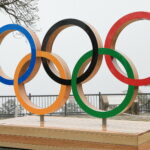
Less than 500 days before the Paris 2024 Games, the return of Russian and Belarusian athletes still remains very hypothetical. Certainly, the IOC formally recommended it to the international federations. But not everyone will follow his instructions. And, for those who support its recommendation, it will be necessary to slalom between the cancellations of events and the conditions imposed by the political and/or sporting authorities of the countries.
Reading the latest events, it now seems possible, even probable, that the question of the Russian presence at the Paris 2024 Games will be resolved on its own, without a formal decision from the IOC. By an inability of athletes to obtain their qualification, and a refusal of Russia to accept the conditions imposed by the Olympic movement.