

The year 2023 will not be Olympic. With the exception of FIFA, where Gianni Infantino will advance without rival to a new mandate, it will not be elective in the international bodies of the sports movement either. Calm before the major maneuvers, as mentioned on this same site Monday January 2.
But the next twelve months will not necessarily follow the sleepy course of a long, quiet river. They could even prove decisive for the four hottest issues in the Olympic movement.
In four questions, and as many attempts to answer, FrancsJeux deciphers the major issues of a year 2023 where anything can happen, the best or the worst.
Will Russian athletes return to international events?
Likely. But still far from done. The IOC suggested it without tongue in cheek during its Olympic Summit last month in Lausanne: reflection has been launched on a return of Russian and Belarusian athletes to the international scene. It could go through Asia, where the Association of National Olympic Committees (OCA) has offered to serve as a pilot fish to pave the way for the rest of the world. In the event that the experiment is deemed conclusive, the entire Olympic movement could follow suit. It is likely that Russian athletes will have to give up their colors, their anthem and their flag. But they saw others. Perhaps they will also have to demonstrate, in a still very uncertain way, their opposition to the conflict in Ukraine.
It remains to be seen at what time of year the doors will open wide. Cautiously, the IOC has not put forward any timetable. But the Russians are pushing for a return to the international scene in time so as not to jeopardize their chances of winning quotas for the Paris 2024 Games. Logically, the decision should come during the first half of the year.
Will the IOC have multiple bids for the 2030 Winter Games?
A few weeks earlier, the question did not even arise: Sapporo advanced as the favorite, Salt Lake City followed on its own route, with an eye turned towards the 2034 edition. But the IOC reshuffled the cards, at the beginning of December, by announcing its decision to postpone the choice of the host city until the Paris session in July 2024. With an additional year to continue the “ Dialogue » with the applicants, known or future, the Olympic body is giving itself time. But it remains exposed to the risk of not having a choice when attributing the winter event.
The Japanese announced last month that they were putting their candidacy on hold to review their strategy and roadmap. The approach fools no one: the Sapporo 2030 team cuts its engine long enough to see the embarrassing corruption affair linked to the Tokyo 2020 Games disappear from the news. Clever. But she also announced her desire to organize a national consultation on the relevance of the candidacy before relaunching the process. Could the project survive public distrust? Difficult.
The Americans in Salt Lake City, for their part, tirelessly repeat that they prefer the 2034 option, but are ready for the previous one if the IOC asks them to do so. They will surely not refuse a Winter Games won without a fight. But for the Olympic body, the scenario of no choice would be disastrous in terms of image.
Will the race for the Summer Games in 2036 gain new starters?
Time no longer has quite the same value in the Olympic movement. The IOC awarded the 2032 Games to Brisbane eleven years ahead of schedule. Today he is discussing with a handful of cities for the 2036 edition. 14 years before the event. Indonesia, Mexico, Qatar, Egypt and India are preparing a file and have made it known. Barring a major crisis on a global scale, they could be joined during 2023 by two or three other countries. At the top of the list is Germany. Its national Olympic committee has launched a vast reflection process, expected to lead to a decision before the end of the year. England could also get involved. South Korea and Saudi Arabia as well.
Will boxing, weightlifting and modern pentathlon find their place at the Games?
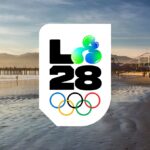
Historical sports of the Olympic movement, they were provisionally excluded from the program for the Los Angeles 2028 Games by the IOC Executive Board. Will the temporary become durable? The decision will be taken during the Mumbai session, scheduled for October 2023.
For boxing, the scales are tipping dangerously to the wrong side. Its international federation, the IBA, persists in remaining deaf to the expectations of the IOC. Its president, the Russian Umar Kremlev, has started a standoff with the Olympic body, but his chances of emerging victorious seem very slim.
Weightlifting is less provocative towards the IOC, but its future remains uncertain. Its international federation, the IWF, elected Iraqi Mohammed Jalood as president last June, thus ending a long series of interim positions. Its liabilities remain heavy, particularly on the issue of doping. The next few months promise to be decisive.
The situation in modern pentathlon appears to be much less worrying. The IOC excluded it from the Los Angeles 2028 Games while waiting to know the discipline chosen by the UIPM to replace horse riding. The body opted for the obstacle course, after a patient and methodical process. The choice was not unanimous, but it ticked a lot of boxes. And, a major advantage, modern pentathlon can count on several supporters at the IOC, including Juan Antonio Samaranch and Albert de Monaco.