
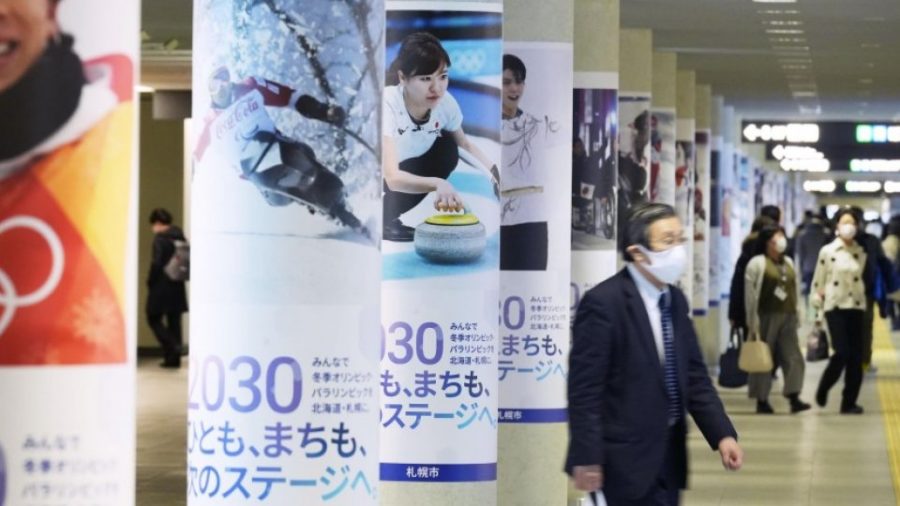
Predictable. The now daily soap opera of corruption at the Tokyo 2020 Games does not only cast a shadow over the last summer Olympic and Paralympic meeting. It also affects Sapporo's bid for the 2030 Winter Games.
The Japanese city, capital of the prefecture of Hokkaido, announced on Monday September 5 that the visit of a delegation of elected officials to the IOC headquarters in Lausanne, scheduled for mid-September, was canceled. It was to be led by the mayor, Katsuhiro Akimoto, and take place before a stage in Munich, organized from September 14 to 17 as part of the 50th anniversary of the twinning of Sapporo with the German city.
Officially, Sapporo's decision to draw a line under its visit to Lausanne is obviously not linked to recent revelations about a corruption scandal involving several partners of the Tokyo Games and a former member of the board of directors of the organizing committee. , Haruyuki Takahashi. “ This has nothing to do with the corruption affair surrounding the Tokyo Olympics and Paralympics“, assured the mayor of Sapporo. The cancellation would be the result of a “ conflict of calendars » between Sapporo and the Olympic body.
Yasuhiro Yamashita, the president of the Japanese Olympic Committee (JOC), explained to the media: “ I spoke with the IOC over the weekend. The programming is not ideal, we mutually offered to cancel the visit this time“. The former judoka was supposed to accompany the delegation from Sapporo to Lausanne.
Still according to Yasuhiro Yamashita, cited by Japanese media, the IOC insisted during last weekend's conversation on the fact that the Tokyo Games affair " was distinct from the Sapporo bid"
But the consistency of the facts fools no one. The visit of the Sapporo delegation to the IOC headquarters had been planned for months. It should have further strengthened the position of the Japanese city as favorite for the award of the 2030 Winter Games, in the face of North American competition (Salt Lake City in the United States and Vancouver in Canada) which is still hesitant.
But the corruption scandal at the Tokyo 2020 Games comes at the worst time for Sapporo 2030. According to a source close to the bid, “ the problem was the timing of the meeting. Visiting the IOC now would only have attracted criticism. There was no choice but to make this decision"
Beyond a schedule that is now unfavorable for a group visit to Lausanne, the affair of the Tokyo 2020 Games is a major blow to the popularity of the Sapporo Olympic and Paralympic project. Last spring, the rate of support of the local population for the candidacy fluctuated, from one poll to another, between 57 and 65%. But the revelations about bribes paid by official partners to the former boss of the Dentsu group are said to be dangerously tipping public opinion.
For Sapporo 2030, the timing is all the more unfavorable as the Tokyo 2020 soap opera is now daily, with new actors in each episode. At the end of last week, the Japanese press revealed that the former president of the organizing committee (and former Prime Minister), Yoshiro Mori, had also received his envelope.
Monday, September 5, the investigation pulled out of the hat a second partner, after the company Aoki Holdings, also involved in the affair. The publishing house Kadokawa Corp, which became an official supporter of the Games in April 2019, also apparently paid Haruyuki Takahashi for services rendered during the sponsor selection phase.
Later in the day, the agency Kyodo News highlighted a third aspect of the affair. This time, it does not directly concern a partner of the Tokyo Games, but an advertising agency based in Osaka, Daiko Advertising. She allegedly paid Haruyuki Takahashi the sum of 26 million yen ($185.000), in three installments. In exchange, the former member of the board of directors of Tokyo 2020 would have used his influence to ensure that Daiko Advertising was chosen as an intermediary in the selection process of national partners.
At the rate at which the investigation is progressing, the coming days could bring a new batch of revelations. And further undermine Sapporo’s bid for the Winter Games in 2030.