The isolation of Russia from the sports movement was already a reality since the start of the conflict in Ukraine. But it could well become even stronger in the months to come.
No less than 35 Western countries, plus Japan and South Korea, signed a joint statement calling for a total and without exception exclusion of Russian and Belarusian leaders from international sports bodies. It was published Tuesday July 5 by the US State Department.
A similar request had already been expressed at the beginning of March, just two weeks after the Russian army began its invasion of Ukraine. The signatories followed in the footsteps of the IOC by calling for the exclusion of athletes from the two countries, and the cancellation of sporting events planned in Russia and Belarus.
This time, Western countries are pushing the needle a little further by asking international sports federations to exclude their Russian and Belarusian members from all official positions.
« Individuals close to the Russian and Belarusian states, including but not limited to government officials, should be excluded from positions of influence within international sports federations such as councils or organizing committees.“, insists the press release from the Ministers of Sports and cultural leaders. The document also calls on sports event organizers to suspend the broadcast of their events in both countries.
The press release concerns in particular, but without naming them, the international boxing (IBA) and shooting (ISSF) federations, two bodies still chaired by Russian officials: Umar Kremlev in boxing, Vladimir Lisin in shooting.
The request of the signatories could also apply to the COIO. Ready to “ recommend » the exclusion of Russian athletes from international competitions, the Olympic body still refuses to exclude its two Russian members, Yelena Isinbayeva and Shamil Tarpischev. For any explanation, she assures that they do not represent their country in the Olympic movement.
Coincidence of the calendar: the disciplinary council of the International Ice Hockey Federation (IIHF) rejected on Tuesday July 5 the appeals of Russia and Belarus against the exclusion of their teams from competitions. The national federations of the two countries had contested the decision of the IIHF, announced at the end of February, to suspend their selections and clubs, in all age categories. The body chaired by Frenchman Luc Tardif also withdrew Saint Petersburg from hosting the 2023 World Cup.
« The independent IIHF disciplinary council has rejected appeals submitted by the Russian and Belarusian ice hockey federations against the IIHF Council's decision“, announced the body in a press release. The IIHF clarifies that its initial decision was not a sanction, but a security measure. The IIHF's decision can be challenged before the Court of Arbitration for Sport (CAS).
Another dark prospect for Russian athletes: the draft of the NHL, the North American professional ice hockey league, risks being played without them. On the eve of its opening, scheduled for Thursday July 7 in Montreal, the clubs are still refusing to express a clear position on the question of Russian players. But there were several who assured the agency Associated Press that they would probably think twice before selecting a Russian hockey player, without having the slightest certainty that he will be able to leave his country and join Canada or the United States.
Last year, no less than 29 Russian players were selected – the largest number since 2003 – during the draft of the NHL. One of them, Fedor Svechkov, was selected in the first round by the Nashville Predators.
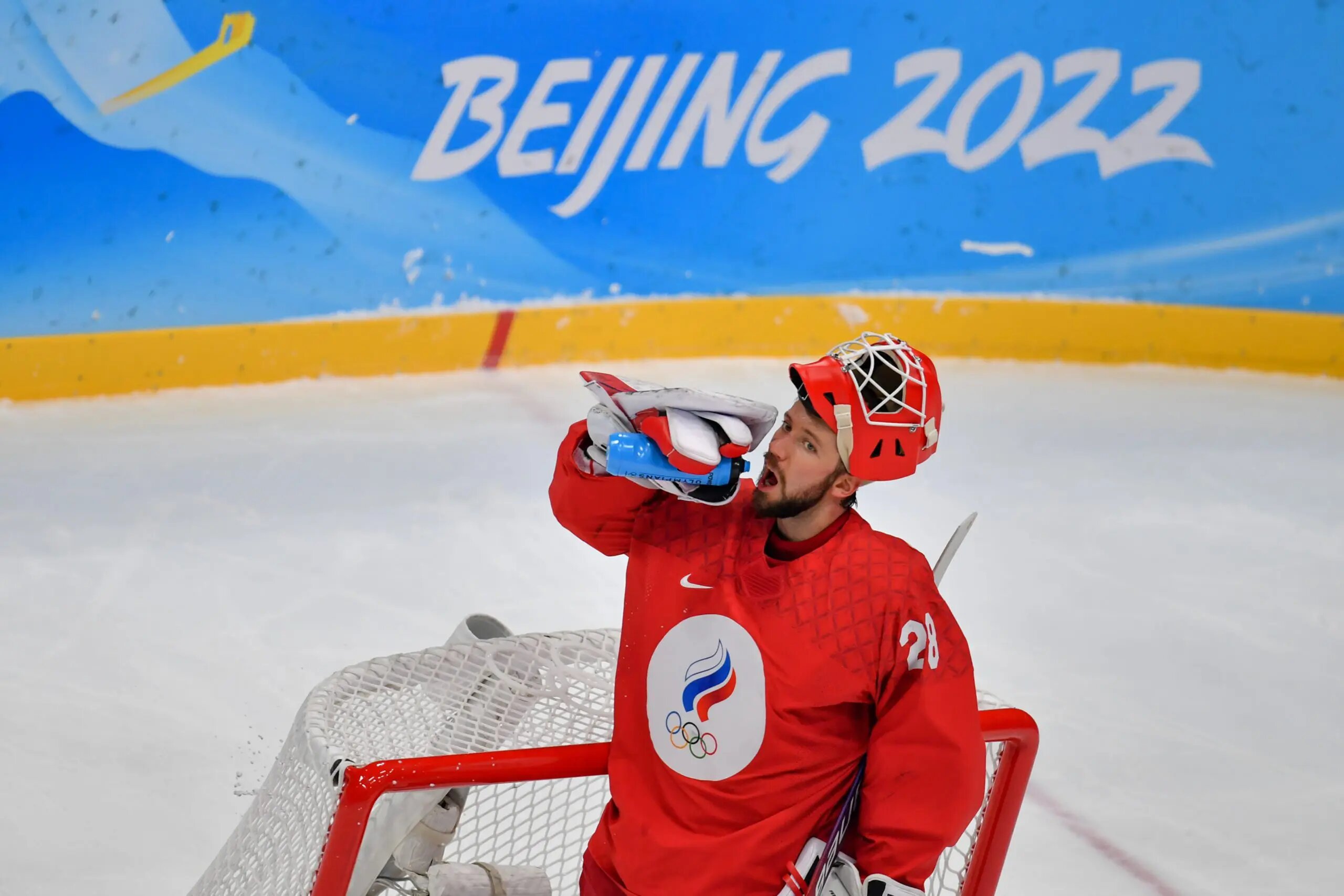
But last week, the agent of Russian player Ivan Fedotov (pictured above), the goalie for the Philadelphia Flyers and the national team, revealed that his client had been forcibly assigned, overnight, to a naval military base in Severomorsk, in northern Russia. Drafted in the seventh round of the 2015 draft, Ivan Fedotov signed with the Flyers last May, after completing his contract with CSKA Moscow in the KHL, the Russian professional league.