
The budget. Inflation. A little less than 800 days before the Paris 2024 Games, these two words are being used in the preparation of the Olympic and Paralympic event without having been invited. And they could well become embedded.
In quick succession, two of the main players in the Games have raised the risk of soaring prices. Both cited the “ international context » to justify their fears.
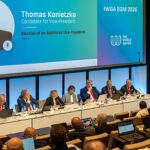
Tony Estanguet spoke first. The president of the OCOG Paris 2024 spoke by video, Friday May 22, during the last day of the IOC session held in hybrid mode from Lausanne.
“I would like to share with you an important challenge that will take us into the second half of 2022: that of the budget, he explained to the members of the Olympic body. The succession of health, economic and geopolitical crises that have been occurring for more than two years now pose new risks for Paris 2024.. The COVID crisis and the conflict in Ukraine have created disruptions in production and supply chains. They have also generated an inflationary context that was impossible to anticipate just a few months ago. »
Tony Estanguet makes no secret of it: cost control, elevated to priority since the creation of the organizing committee, is becoming a high-precision exercise. But the three-time Olympic champion is not giving up. Facing the IOC, he assured that the initial ambition of proposing a Games model “spectacular, popular and enduring” was still relevant.
The project will remain unique“. But Tony Estanguet warns: we will have to go “ even further in optimizations and savings behind the scenes of the Games”. How ? By seeking with the CIOs the “ necessary adaptations » in order to compensate for an inflation rate announced in a range of 5 to 8% between 2022 and 2024.
The OCOG's budget, still set at 3,9 billion euros, will be revised before the end of 2022. To stay the course, the OCOG will undoubtedly have to cut corners on the least essential expenses. THE " behind the scenes of the Games“, according to the expression of Tony Estanguet. THE " decorum", as Guy Drut, one of the four French members of the IOC, likes to call it.
Another caveat: construction. Nicolas Ferrand, the general director of SOLIDEO (Olympic works delivery company), took advantage of a visit to the construction site of the athletes' village in Seine-Saint-Denis, Monday May 23, to in turn discuss the inflationary danger.
The Frenchman recognized it: the surge in COVID-19 cases in China and the conflict in Ukraine will not be painless when the books are opened. With the inflation of raw materials in the building and construction sector, you will have to pay more.
SOLIDEO had inherited an initial budget of 3,2 billion euros. It was revised last year, to be increased to 4 billion. The contribution of the public authorities was extended by 175 million euros, from 1,38 billion to 1,55 billion euros.
Nicolas Ferrand assures us: “ We will keep our commitments. » But the boss of SOLIDEO confided on Monday May 23 that he had “ cold sweats, from March until mid-April", when builders recognized that they no longer had visibility on the availability of materials, in particular steel, wood and locksmiths.
« With one of the manufacturers, the suppliers denounced the contracts, explained Nicolas Ferrand. But for three weeks, the message has been that a priori we will not have any supply issues by the end of the year.”.
SOLIDEO considered for a moment, at the end of March, changing its plans and using substitute products for certain materials. But this option was abandoned when the uncertainty over supplies could be cleared up.
No worries, therefore, at least on the calendar. The Olympic village, built in the municipalities of Saint-Denis, Saint-Ouen and Ile-Saint-Denis, will be completed at the end of 2023. SOLIDEO will hand over the keys to the COJO in February 2024.
The site is currently running five days a week, occasionally on Saturdays until 15:00 p.m. There are no plans to speed up the pace and resort to Sunday work.