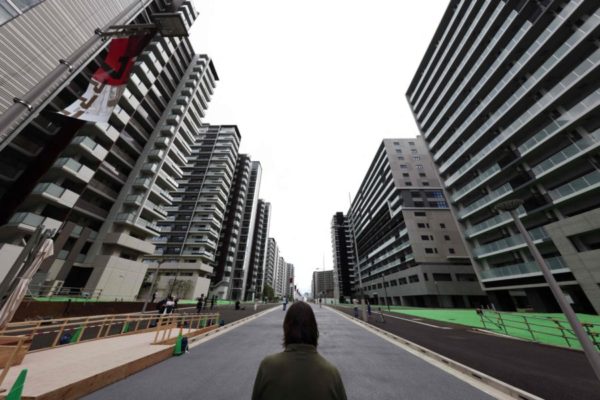
The day should have been full of excitement. And the moment full of emotion. The Tokyo Games athletes' village officially opened its doors this Tuesday, July 13, early in the morning, ten days exactly before the start of the Olympic event. A date, a real one. But the scene had only a few handfuls of witnesses.
The opening in question did not concern many people. Under the health rules imposed on delegations by the organizers and the Japanese authorities, athletes are authorized to settle in the village only five days before the start of their events. Ten days before the opening ceremony, their presence in the square is still written in the future. They will come, of course. But only later.
In the absence of athletes, the media could have counted the numbers. But they were asked to stay away from the scene. The organizing committee announced it the day before in a press release: “ The Olympic Village will open as planned tomorrow (Tuesday July 13), but please note that athletes will be dropped off and enter the village at a location inaccessible to media. It will therefore not be possible to film them as they enter. We will also not be able to indicate the number of athletes entering the village tomorrow, nor provide their contact details. »
The reason ? Mystery. The organizers of the Games, already accused by the international media of attacking press freedom, want to set the tone now for an Olympic event where journalists will be forced mainly to work in virtual mode ? Possible. Unless they fear showing the world, just ten days before the opening, the image of a village without a single athlete. In both cases, the message is devastating.
In the same press release, the organizing committee specified Monday July 12 that the ceremony usually surrounding the entry of delegations into the village will be “ simplified“. In reality, the welcoming ceremonies will simply be canceled. Meetings with the media will also be removed from the schedule.
For the rest, life in the Olympic village looks set to be dominated by health constraints. Wearing a mask will be compulsory. COVID-19 testing will be daily. A clinic dedicated to possible cases of coronavirus was added to the initial plan, in addition to the 21 residential buildings, canteens and the usual services offered to residents. It will operate 24 hours a day. But the Japanese make it clear: infected people with the most serious symptoms will be hospitalized or sent to quarantine in a reserved hotel outside the village.
On site, athletes will have to follow the rules without being able to deviate from them. They will not be able to leave the health corridor established by the Japanese – village, training ground, competition zone – nor afford the slightest tourist excursion. Violators will be punished.
According to the IOC's count, more than 80% of athletes will be vaccinated by the time of the Tokyo Games. The figure could be reassuring. But two members of the Ugandan delegation, a Serbian athlete and an Israeli tested positive upon arrival at Tokyo airport. All were vaccinated.
Ten days before the opening, delegations are now arriving en masse in Japan. More than 2.200 athletes are expected this week in Japan. Still too early to put their bags down at the athletes' village.
The Main Press Center (MPC) also officially opened its doors on Tuesday, July 13, at the Tokyo Big Sight International Convention Center. But, like the athletes' village, it should often ring hollow. According to the latest tally from the organizers, only 4.600 foreign journalists are expected for the Olympic and Paralympic Games. Before the start of the health crisis, their number reached 8.400 people.