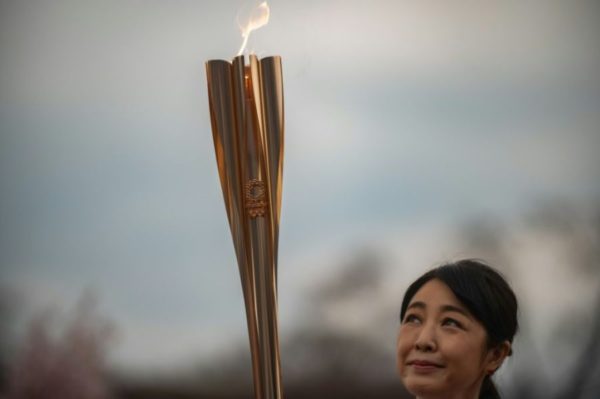
New blow for the organizers of the Tokyo Games. Local authorities announced on Tuesday June 29 a feared but inevitable decision: the Olympic torch relay will be largely banned from public roads during the first eight days of its journey in the Japanese capital.
Having left Fukushima prefecture on March 21, the torch relay is due to arrive in Tokyo on Friday July 9. His initial route would take him through a large number of neighborhoods and suburbs of the capital, until his entry into the Olympic stadium, two weeks later, during the opening ceremony.
The arrival of the flame in Tokyo was supposed to revive the Japanese public's enthusiasm for the Games, still at an all-time low less than a month before the start of the event.
But the new provisions announced by the metropolitan government risk further dampening the atmosphere. The torch route will not use public roads between July 9 and 16. It will be diverted to an alternative route, behind closed doors. He will barely see a few spectators on the small islands of the prefecture.
The rest of the relay, between July 17 and 23, has not yet been decided. But it also promises to be very affected by the new health measures.
The decision of the Tokyo authorities will not only have the effect of transforming the flame's journey into an endless no-man's land. More than 600 runners invited to carry the torch during a relay in the capital will have to draw a definitive line on the experience. They will have to be content to attend, masked and in silence, a flame lighting ceremony planned each evening at the end of the day's journey.
Organizers plan to hold a ceremony on July 9 at Komazawa Olympic Park, in the Setagaya district, to celebrate the arrival of the flame in the capital. But it could be held behind closed doors.
Not very optimistic comment from a manager of the organizing committee, cited by the agency Kyodo News : " The health situation is poor, with a still significant number of infections. If this continues, the state of quasi-emergency will be maintained beyond July 12. »
Placed in a state of emergency for almost two months, the Japanese capital has been in an intermediate state since June 21, described as “ almost emergency”, until July 11. But Prime Minister Yoshihide Suga has made no secret that the state of emergency could be reestablished at any time, including during the Tokyo Games, in the event of a new outbreak of the pandemic.
On Wednesday June 23, Tokyo recorded 619 new infections in 24 hours, the highest figure in about a month. On Tuesday June 29, 476 new cases were confirmed by local authorities.