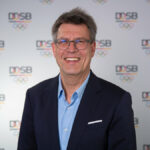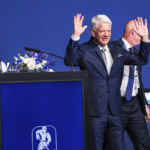
Witold Banka can rub his hands. The former Polish athlete has not yet officially taken his place in the office of president of the World Anti-Doping Agency, but the IOC is already responding immediately to his requests. Nice start.
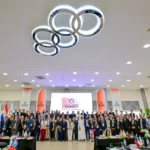
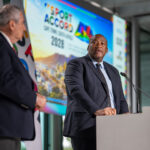
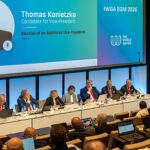
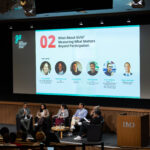
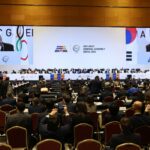
Less than two months before he takes office as Craig Reedie's successor as WADA President, scheduled for January 1, 2020, Witold Banka was able to test his oratory skills at the World Conference on Doping in Sport, organized since Tuesday, November 5 in Katowice, Poland.
Minister of Tourism and Sports in his country, the Pole played at home. An advantage. He could have opted for a cautious approach, for his first international outing. He chose the offensive. With one priority: money.
« WADA should impose sanctions more often, not just finger-wagging, attacked Witold Banka, 35, whose election as president must be made official on Thursday, November 7 in Katowice. But for this and other activities to be possible, WADA needs a considerable budget. I find it ridiculous that an organization with global regulatory status has a budget of less than $40 million. An average football club has a significantly larger one. »
The numbers prove him right. At the latest count, WADA has an annual budget of $36,4 million, half of which is provided by the IOC. Correct, nothing more. But certainly not up to its ambitions and, even more so, the reality of doping in international sport. Craig Reedie, the future former president of the Montreal-based organization, recognized this on Tuesday in Katowice: “ Faced with the scale of Russian doping at the Sochi 2014 Winter Games, we were not equipped to respond effectively. »
Money, then. Witold Banka wants more. Much more. “ I therefore appeal to sports leaders, but also to my colleagues who represent governments, and to private companies: if you want sport to be clean, you must increase financial support for the fight against doping. »
The IOC has already responded. Present in Katowice, Thomas Bach announced the provision of an envelope of 10 million dollars for the fight against doping. On the scale of the budget of the Olympic institution, the gesture may seem minimal. However, it represents a 50% increase in its contribution to the WADA budget.
In detail, the jackpot will be used in four directions: financing the storage for 10 years of samples taken by international federations and national anti-doping agencies; launch a new control test by genetic sequencing; increase research resources; and finally strengthen WADA’s investigative powers.
Witold Banka is not yet officially invested, but he already sees the coffers of his new house filling with a surplus of 10 million dollars. Cool.
But the Pole does not intend to be content with seeing the usual payers, the IOC and governments, put their hands in their pockets. He calls on private partners of the Olympic movement to join the movement.
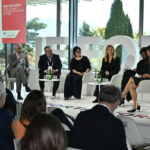
« We cannot continue to increase contributions (of the IOC and the States), he suggested during a round table on Tuesday in Katowice. We must find alternative solutions to increase the budget dedicated to the fight against doping. We need to convince the biggest partners that, if they want to be sponsors of sport, they must be sponsors of a clean sport."
Realistic? Without a doubt. The global partners of the Games alone, members of the IOC's TOP marketing program, contribute to financing the Olympic movement to the tune of approximately one billion dollars for the period 2017-2020. The broadcasters of the Games, for their part, bring 5 billion into the coffers. It would not shock anyone that their presence in the Olympic setting is accompanied by financial participation in the fight for a doping-free sport.
During his campaign for the presidency of WADA, Witold Banka proposed the creation of a solidarity fund intended for the fight against doping in developing countries. The Pole is not giving up.
« It will be a long road”, he admits. But it appears inevitable. In 2017 alone, the three countries having carried out the greatest number of doping tests – Germany, China and the United States – totaled around 35.000 between them. At the other end of the scale, the 29 nations least active in the fight achieved, collectively, only 957. That says it all.