Funny day for Russian sport. A day full of contrasts. Started with a light step, ended in a grimace.
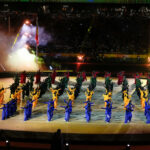
In the morning, Tuesday July 2, Russia won, as if in a dream, the organization of the Summer Universiade in 2023 (photo above). Proof, once again, that its exclusion from the sporting movement now belongs to the past, or almost.
But at the end of the afternoon, a press release from the World Anti-Doping Agency dampened the mood. It reveals that nearly 300 Russian athletes suspected of doping were identified following the analysis of thousands of samples recovered at the start of the year, not without difficulty, in the former Moscow anti-doping laboratory. Proof that Russian sport has not finished dragging in its shadow the smell of doping and cheating.
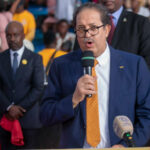
The tails side, first. In Naples, where the Summer Universiade begins on Wednesday July 3, the executive committee of the International University Sports Federation (FISU) did not tremble when awarding Yekaterinburg the organization of the Universiade in 2023. The Russian city was the only candidate. She was chosen unanimously by the 23 leaders present around the meeting table. Pavel Kolobkov, the Russian Minister of Sports, traveled to Naples to accompany the bid team. He didn't regret it.
For Russia, the event is significant. In Yekaterinburg, in 2023, the Universiade will have a budget of 10,1 billion euros. It will use 28 competition sites, of which around twenty already exist. The application file provides for the construction of new equipment for volleyball, judo, tennis, swimming and gymnastics.
Above all, the designation of Yekaterinburg confirms Russia's strong return to the map of major sporting events. A return that began last November when the FIVB awarded it the organization of the Men's Volleyball World Cup in 2022.
The head side, now. Really dark. WADA revealed it on Tuesday July 2: the list of athletes suspected of doping, after analysis of data from the Moscow laboratory, includes 298 names. They remain secret, as do their disciplines. But details concerning them have already been sent to their international federations.
« The agency's intelligence and investigation department has identified a target group of 298 athletes (representing 578 samples) presenting the most suspicious data, explains WADA in a press release. The files of 43 athletes were sent to the relevant federations, which began evaluating the evidence to identify cases of anti-doping rule violations. »
For Russia, the blow is hard. Certainly, Russian sport is no longer officially banned from the international sports movement, with the exception of athletics, suspended by the IAAF since November 2015. But the figures revealed Tuesday July 2 by WADA could seem likely to take him back a few steps in his quest for redemption.
The following ? The ball is now in the court of the international federations concerned. It is up to them to take the analysis of the files of alleged cheaters a step further, then decide on possible sanctions. Otherwise, WADA reserves the right to refer the matter to the Court of Arbitration for Sport (CAS).
For Günter Younger, director of WADA’s Intelligence and Investigations department, the discovery of these some 300 new Russian athletes suspected of doping marks “ one more step towards bringing those who cheated to justice, and a great step forward for clean sport and for athletes around the world. » For sure.