Bad timing. One week before the elective congress of its international federation (IBU), the world of biathlon is shaken by a new doping affair. Unsurprisingly, it affects Russia. But its consequences could extend elsewhere.
The facts, first. The International Biathlon Federation published a brief press release on Thursday, August 30, relating to a doping case. The text turns out to be very laconic: “ The International Federation today warned the Russian Federation about an anti-doping code violation involving four athletes. The Russian Federation and the athletes involved now have 14 days to respond to questions. If anti-doping code violations are not recognized as such, these cases will be referred to the IBU Specialized Hearing Committee."
Not the slightest name. Not a single clue to try to guess the identity of the cheaters, the nature of the offenses and the period concerned. The Russian Federation has not lifted the veil on the mystery of these biathletes either. She barely recognized that three of them had today put away their rifles and ended their careers, the last of the quartet not belonging to the national team.
So who ? The Russian media dug into the matter. According to them, it would affect three bigwigs in the discipline: Svetlana Sleptsova, Evgeny Ustyugov, Alexander Chernyshev. The last, Alexander Pechenkin, has a less prestigious record of service.
Svetlana Sleptsova, now 32 years old, has left the sport. She was Olympic relay champion at the Vancouver Games in 2010.
Evgeny Ustyugov, the best known of the trio, won gold in the mass start at the Vancouver 2010 Games. The same year, he pocketed the small crystal globe of the World Cup rankings in this discipline. He was also Olympic relay champion at the Sochi Games in 2014. He is now retired from biathlon.
Finally, Alexander Chernyshev was junior world champion, before experiencing a less glorious run.
Questioned by Russian media, Evgeny Ustyugov played ignorance: “ I don't know anything about this matter. My career ended four years ago, I know that we have the right to keep the samples for eight years for additional analyses. But I wonder why this case is coming out today. »
The consequences now. Sportingly speaking, they could further enrich Martin Fourcade's record. On February 21, 2010, at the Vancouver Games, Evgeny Ustyugov won the gold medal in the mass start, ahead of the Frenchman, ranked 2nd, and the Slovakian Pavol Hurajt, credited with 3rd place at the finish line. (pictured above).
In the event that the facts were proven, and especially that the doping case concerned the Vancouver Games, the Russian's name would be erased from the list. Eight years after the competition, Martin Fourcade would inherit a sixth Olympic gold medal.
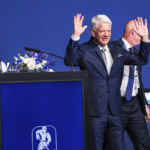
In the shorter term, this new case of doping in biathlon could play a role in the campaign for the presidency of the IBU. The international organization is looking for a successor to Norwegian Anders Besseberg, 72, its president since 1993, forced to resign last April for having received $300.000 in bribes in exchange for his silence on cases of doping in Russian biathlon.
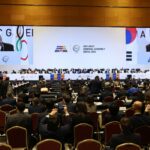
The presidential election is scheduled to take place on Friday September 7, 2018 during the annual congress, organized in Porec, Croatia. Two candidates are in the running: the Swede Olle Dahlin, current vice-president of the IBU in charge of development, and the Latvian Baiba Broka, former Minister of Justice.
In recent weeks, the tone has risen between the two applicants. Sensing danger coming, Olle Dahlin accused Baiba Broka of being supported, even manipulated, by Russia. The Latvian political leader denied this. But Russian biathlon, its business and its influence, could well weigh heavily at the time of the election.