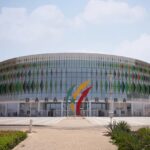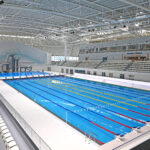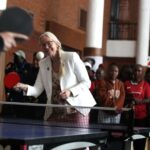
Paradox. At a time when Paris 2024 and Los Angeles 2028 are already promising athletes an “unforgettable Olympic experience”, the IOC is putting both feet on the brake pedal. His priority: to further trim the fat from the budget for the Tokyo 2020 Games. Even if it means lowering the conditions of stay in the athletes' village (photo above). Dark outlook.
John Coates, the chairman of the evaluation commission for the Tokyo 2020 Games, explained this on Tuesday October 3, on the first day of his seventh visit to the Japanese capital: “We are raising a number of questions for the national committees Olympic Games on how to save money by reducing, to an acceptable limit, the level of services at the athletes' village. »
The Australian could have left it there, letting everyone get lost in hypotheses about the reality of his words. But, true to his reputation, he detailed the first ideas discussed with the organizing committee. They should not make it very popular with future Olympic selections.
The first idea directly concerns the athletes' stay in the village. John Coates admitted it: its duration could be revised downwards. In its list of proposals, already submitted to 28 national Olympic committees, the IOC suggests setting up a system of “transferable beds” at Tokyo 2020. In contradiction with the culture of the Games, competitors will be asked to clear their rooms once their event is over. The beds thus freed can then be occupied by athletes whose competition has not yet started.
The proposal is still at the draft stage. The responses from the 28 National Olympic Committees will be discussed over the coming weeks with the IOC Athletes' Commission, then the idea will be debated in early December by the Executive Board. It could then be nuanced, or even simply abandoned. But John Coates never made a secret of it, speaking in his capacity as vice-president of the Olympic organization: "We must find a way to cut a billion dollars from the budget of the Summer Games, and 500 million for the Winter Games. »
The same principle could be applied to team management. The IOC and the organizing committee would issue transferable accreditations to coaches, technicians and even doctors. They would be valid before and during the event concerned, then they would change hands. But John Coates announced: “The Olympic committees would receive financial compensation for agreeing to transfer beds to the village and accreditations of their technical staff. »
In principle, the idea of reserving accommodation in the village for athletes competing or waiting for their event is not new. Some Olympic committees have gotten into the habit of lodging those selected who have completed their competition in a hotel in the Olympic city. A way of respecting the tranquility and concentration of their comrades still in the race, while enjoying the experience of the Games until the last day. But this formula is expensive. It involves an expense for the national Olympic committee, unthinkable for the less fortunate.
By pushing out some of the athletes, the IOC would certainly gain a few new millions. He seems to have made it a priority, despite the efforts of Japanese organizers to lower the current budget for the Tokyo 12 Games to $2020 billion. But such a project could also have the effect of further widening the gap between the richest and the least fortunate in the Olympic universe.