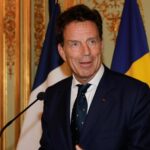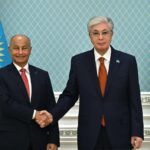

A little more than four months separate Los Angeles and Paris from the finish line of the race for the 2024 Games. Very precisely 133 days. A long final sprint in which Budapest, the last of the cities forced to give up, would have liked to participate. While the Californian and Parisian teams prepare for the visit of the IOC Evaluation Commission, FrancsJeux questioned Balazs Fürjes (photo above), the president of Budapest 2024. The Hungarian speaks at length, with hindsight and reflection, on the withdrawal of his city's candidacy, on the future of Budapest, and on the ills of the movement Olympic.
FrancsJeux: How do you feel today?
Balazs Furjes: I feel sadness. Our withdrawal from the race for the Games constitutes a big loss, for myself and for everyone who was involved in the project. I see it as a lost opportunity, for the city of Budapest, for Hungary, but also for the Olympic movement. We had the honor of competing against two incredible cities, Los Angeles and Paris. But Budapest was not the underdog in the race. Our project was an alternative, a chance to show that a medium-sized city could organize extraordinary Games. But life goes on. Today we look to the future.
Will this future take the form of a new candidacy?
Maybe. But let's take it step by step. There may be a new application, for 2028, 2032 or even later, but the road to another project remains long. Today, our priority is that the competition venues that we had planned in our file are completed. We assured during the bid campaign that these new facilities were not dependent on the Games, we promised that they would be built regardless of the outcome of the battle for the Games. The Hungarian government has confirmed: these sites will see the light of day. The stadium, the Olympic park, the athletes' village on the university campus, the velodrome... They will be built on the locations provided for in our application file. Day after day, Budapest is establishing itself a little more as a major city on the map of major sporting events.
What lesson did you learn from the failure of this application?
I learned that, if we were to submit a new candidacy for the Games, we would first have to organize a national referendum. This would avoid any questions or positions that might arise at a critical moment in the campaign. We could then become the first city to organize an Olympic Games decided by a referendum.
Looking back, do you think the situation that led to your withdrawal from the race could have been avoided?
No. It was impossible for us to imagine that things could happen like this. We must remember that all political forces in Budapest were in favor of the project when we started in 2015. The application benefited from a very unexpected and unprecedented consensus. Everything that happened next had nothing to do with the Olympics. We were victims of a classic but irremediable phenomenon, the desire of a political group which sought to make a name for itself one year before the general elections in Hungary. This movement succeeded. But its leaders explained to me, after the withdrawal, that they were not fundamentally against the Games.
Despite everything, something is wrong at the moment in the Olympic movement...
Indeed. The problem is not with the Games, which remain a fantastic event whose impact is very positive for a city and its population. It is due to the perception of the Games by the general public. But this gap between reality and image cannot be resolved by the candidate cities alone. There must be a joint effort between the candidatures and the IOC. We must emphasize even more the benefits of the Games, highlighting the examples of Barcelona 1992 or London 2012. I remain convinced of the decisive contribution of the IOC Agenda 2020. Without him, Budapest would never have been a candidate for the 2024 Games. But Agenda 2020 will have to become a reality, not just a set of written resolutions. The question that arises today is whether the Games are not only intended for the largest metropolises in the world. To demonstrate the opposite, the IOC will one day have to grant them to an intermediate city, such as Budapest, Amsterdam or Helsinki.
Would a victory for Budapest in the race for the 2024 Games have changed the future of the Olympics?
Yes. I'm convinced. Budapest would have set a precedent, it would have opened the door to medium-sized cities. This opportunity was lost. She was lost to us. And, even if it had nothing to do with our renunciation, it was also lost for the IOC.