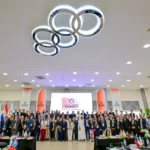
The numbers don't lie. With 45 medals, its best total in history, Africa succeeded in its Rio 2016 Games. Four years earlier, in London, the continent had completed the Olympic fortnight by razing the walls. Results: 35 places on the podium. Disappointing. Three years before the Tokyo 2020 Games, the continent's sports leaders are now looking towards Japan. They do it, this time, without making a secret of a rediscovered ambition. Several dozen of them are currently meeting for two days, until Friday April 21, in a hotel near Abidjan airport, in Ivory Coast, at the invitation of the Association of National Olympic Committees African countries (ACNOA). Forum theme: “Together define a winning strategy for Tokyo 2020”.
Before the time for good ideas and recipes for success, African sport takes the time for analysis. Thursday April 20, ANOCA and its guests reflected on the figures from the Rio Games, often hesitating between pride and frustration. Certainly, the continent as a whole won 45 medals at the last Games. But Europe won ten times more. Above all, Africa's collective result weighs less than 5% of the total medals distributed in Rio de Janeiro, precisely 4,6%. “Insufficient,” everyone insisted.
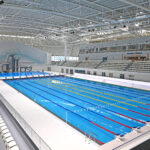
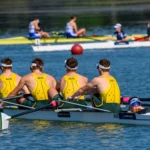
In detail, Kenya proved to be the most successful at the Rio 2016 Games, with 13 places on the podium, for a strong delegation of 89 athletes. South Africa took second place, with 10 medals, but with a significantly larger Olympic team (137 selected). Ethiopia is in third position, with a very respectable ratio: 8 medals for only 38 entrants. But, another reason for concern noted this Thursday in Abidjan, Kenya and Ethiopia shone in only one sport: athletics. South Africa, seen more than ever as the best student on the continent, demonstrated a unique balance of power in African sport, winning medals in athletics, swimming (photo below), rowing, rugby and triathlon.

During the last Olympics, ANOCA put its hand in its pocket, announcing in the spring of 2013 exceptional aid of $607.000 for the preparation of the Rio Games. It benefited 101 African athletes, representing 17 countries. Athletics inherited the largest share (74%), ahead of swimming (14%), taekwondo (8%), judo and boxing. Lassana Palenfo, its president, announced Thursday April 20 at the opening of the forum: ANOCA's aid will be increased for the current Olympiad. It amounts to $1 million for the 2017-2020 period.
The effort is not small. But Africa is thinking big. She wants to move forward together towards Tokyo 2020, without stopping herself from leaving her comfort zone. Hicham El Guerrouj, the double Olympic champion in 2004, member of the ANOCA Athletes' Commission, suggests "better financial support for women's sport and expanding aid to a greater number of sports". The Moroccan admits to dreaming of a multi-sport training center where athletes from all over the continent could meet. Kirsty Coventry, the former swimmer from Zimbabwe and member of the IOC, proposes to “break down boundaries and better share skills”. She also notes that the help provided to athletes must not only be financial, but also medical and psychological.
The first day of the ANOCA forum revealed it as obvious: South Africa stands out more than ever as the model to follow. His Olympic team won 10 medals at the Rio Games. She is aiming for at least 15 at Tokyo 2020, eyeing cycling, climbing or skateboarding as new areas of conquest. Its Western-style organization, structured and planned, makes people envious. “But nothing is due to chance,” explains the president of the national Olympic committee, Gideon Sam, in a preaching voice. “We have invested a lot. Communication, for example. To improve our image, we recruited an external agency. With it, we now publish a magazine. The first issues cost us money, today it brings us money. » The Olympic committee did its accounts: over the four years of the Olympiad, each of the 10 medals won at the Rio Games required an average expenditure of one million rands, or around 70.000 euros.
Lassana Palenfo insists: “Africa must no longer agree to send qualified athletes to the Olympic Games under universality. We will go to Tokyo to aim for more podiums. » An appointment has been made.