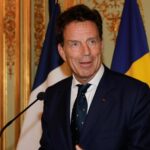
London 2012, Sochi 2014, Tokyo 2020… The question of costs resurfaces like a sea serpent at the Olympic Games. Budgets go out of control, expenses often get out of control. Since December 2014, the IOC Agenda 2020 has aimed to reverse the trend by advocating better-controlled projects and more responsible systems. Credible or illusory? At a time when the four candidate cities for the 2024 Games are offering a low-cost vision of the event, FrancsJeux asked sports marketing expert Michael Tapiro, president of the Sports Management School.
FrancsJeux: The IOC Agenda 2020 included among its most important resolutions a reduction in the cost of the Olympic Games. Is this realistic?
Michael tapiro: Yes and no. It is normal for the IOC to encourage more moderation in Games budgets. The time for bling bling is over, the crisis has passed, except in countries like Russia and China, where it is almost impossible to know the reality of the figures. But the trend towards low-cost seems to me more of a posture than a reality. We announce budgets of 4 to 6 billion euros, but we discover that they ultimately cost 10 to 12 billion. Construction costs are reduced, but organizers are often forced to add lines to their accounts. At the Games, budgets will always slip.
Where are the “risk areas”, where it is difficult to control costs?
Just yesterday, the answer was easy: infrastructure. Today, applications such as Paris, Los Angeles or Rome are proposing systems where the buildings are almost all existing. The time for major Olympic projects is over. We now build useful. A good example: the Football World Cup in Qatar in 2022. The Qataris are offering demountable stadiums which would be exported to Africa once the competition is over. But the additional costs remain numerous, they slip between the lines. Bring together contractors to build an athletes’ village, for example. Or, again, meet the expectations of municipalities directly or indirectly concerned by the Games.
In this regard, how does the race for the 2024 Games look?
It brings together the cities of four Western countries, with fairly equivalent, very reasonable budgetary approaches. The risks of budgetary slippage are minimized by the absence of very large-scale projects. Paris, in particular, is fortunate to already have most of the sports equipment. It would only be necessary to build an Olympic swimming pool.
Is it reasonable to think that the Games now pay for the Games and almost always turn out to be profitable?
With the new situation, a city that would host the Games would find itself largely there. But the return on investment often takes longer than expected. The benefits are not always immediate, they are measured in the long term. Barcelona, for example, still benefits from the 1992 Summer Games today.
What economic benefits could a city like Paris gain from organizing the Games in 2024?
The Games could enable it to make a significant leap forward in terms of public transport. Above all, Paris could take advantage of this to become a major sports-business hub on a global level.