The Olympic revolution is underway. She doesn't pause at all. And, as announced, it aims to place the athletes in the front row of the room. Proof of this was once again given with the IOC International Athletes' Forum, the 7th of its name, organized until Saturday October 10 in Lausanne.
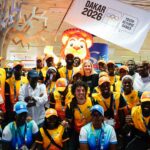
In the room, around a hundred athletes from 40 countries. An imposing battalion of Olympians which, according to the organizers, accounted for no less than 100 medals and 200 participations in the Games. In the lot, representatives of athletes from the International Paralympic Committee (IPC) and, for the first time, emissaries from the organizing committees of the next Olympic Games. Beautiful people, then. On the stand, two masters of ceremonies, both German and from the fencing field: Thomas Bach, the president of the IOC, and Claudia Bokel, president of the athletes' commission of the Olympic institution.
Basically, no major upheaval, but a broad consensus around a trend: the empowerment of athletes. All participants unanimously supported Agenda 2020, particularly three of its resolutions:
- Empower athletes through better communication and transmission of information. Fully integrate all communications to athletes into the Olympic channel.
- Ensure that all International Federations establish an Athletes’ Commission in accordance with IOC guidelines.
- The Court of Arbitration for Sport (CAS) will establish and train athlete referees.
Comment from Claudia Bokel, who is also very involved in Hamburg's bid for the 2024 Games: “The Athletes' Forum was extremely productive. Many ideas were exchanged and we will continue to suggest new ways to ensure athletes remain at the heart of the Olympic movement. » Same story with Thomas Bach: “Having been one of the founding members of this athletes' commission in 1981, I am happy to see the progress made so far, where athletes play a fundamental role in decision-making. »
Highlights included a practical session on the IOC’s latest initiatives for athletes, including the Olympic Athletes’ Hub and the Integrity e-Learning Program. Participants were able to test them “exclusively”, in order to give their first impressions, before their launch in early 2016 as a prelude to the Rio Games.
The revolution is underway, therefore, but it is not advancing everywhere at the same speed. In Africa, in particular, athletes have long been under-represented in the Olympic movement, or not represented at all. Under the leadership of a dozen of them, including the Senegalese Amadou Dia Ba, the Malian Kady Kanouté, the Moroccan Hicham El Guerrouj and the Zimbabwean Kristy Coventry, their presence is now more visible. An Athletes’ Commission has been formed within the Association of African Olympic Committees (ACNOA). She was represented last month at the African Games in Brazzaville. Then it held its first forum at the beginning of October in Marrakech. “But currently, less than twenty national Olympic committees have an athletes’ commission,” explains Kady Kanouté. Medium-term objective: double this figure. To achieve in 2020 a representation of athletes in all countries of the African continent.