
The IOC Evaluation Commission for the 2022 Winter Games completed the second day of its visit to Beijing on Wednesday March 25. He still has three left before packing up, leaving China and preparing to write a report that is always crucial in the race for the Olympics. A second day where its 19 members had to show a lot of imagination to believe in the Winter Games in the Chinese capital in 2022. Seven years before the event, the project presented by China appears very attractive on the paper, but still very uncertain in reality.
First observation: pollution. A recurring subject of concern in Beijing and its immediate surroundings. On Wednesday March 25, the level of pollution was found to be six times higher than the threshold that the World Health Organization (WHO) considers safe for health. A result that the IOC delegation has been presenting in China since the beginning of the week did not need to analyze for long. All he had to do was breathe the ambient air to understand that it would be risky to organize the Games in such a setting.
The Chinese know this. They don't hide it. But they had foreseen the obstacle. Zhan Jiandong, the vice chairman of the bid committee, assured the media present during the evaluation commission's visit: "The air quality is satisfactory in the rural areas where the ski sites and snowboarding, but it remains a concern in Beijing, where the ice sports competitions would be held. But in 2013 we implemented a five-year action plan to reduce the level of pollution by a quarter. »
The five-year plan mainly provides for two measures: the gradual closure of most factories that still run on coal, and the gradual scrapping of the oldest vehicles circulating in Beijing and its region. The first results would already be visible. No less than 400 factories were closed last year. There should be another 200 imitating them before the end of 2015. According to the Chinese authorities, coal consumption should drop by 13 million tonnes by 2017.
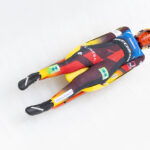
Another “fiction”: transport. On Wednesday March 25, the 19 members of the IOC evaluation commission took nearly 3 hours to travel by bus from Beijing to the Yanqing station where the alpine skiing, luge, bobsleigh and skeleton events would be contested. On arrival, they had to show a certain imagination to believe the promises of the bid committee, proud to explain that the site would only be a 20-minute drive from the capital after the implementation. in service of a high-speed train. The same train would take 50 minutes to reach the Nordic ski facilities, located 200 km from the Beijing athletes' village.
The Chinese have planned everything. They swear, hand on heart, that there would be abundant snow at the time of the Games, the air as fresh as a spring morning and transportation fast and safe. To those who experienced the Beijing Games in 2008, the promises seem credible.