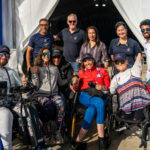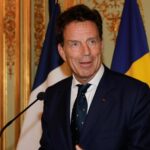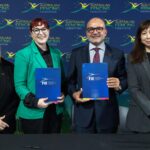
Olympic pursuit champion at the Turin Games in 2006, Vincent Defrasne had the privilege of discovering in preview, with a small group of other athletes from around the world, the 40 proposals that make up the IOC Agenda 2020. At the end of this presentation, by Thomas Bach, of the roadmap of the Olympic movement, the former French biathlete had the idea of writing an article. He sent it to FrancsJeux. We are publishing it in its entirety.
“Last week, I joined other athletes like me to speak with International Olympic Committee President Thomas Bach about Olympic Agenda 2020 – the strategic roadmap for the future of the Olympic movement – and the 40 recommendations which will be voted on by IOC members in December. The Olympic movement is not seeking profound changes, but developments that will allow very different cities to host the Games, changes that will attract an even wider audience, and actions that will provide support and protection to athletes – at first , in the middle and at the end of their career.
I have had the extraordinary opportunity to spend most of my life in sports and within the Olympic movement. I pursued the dream of competing at the highest level and for me that dream came true. In virtually every dimension, the sport is simply magnificent. However, I am shocked by the amount of negative comments I hear and read about sport. Sport brings so much to individuals, communities and countries, and too many people seem unaware of it.
I know that it is fashionable to emphasize the negative, but sport brings optimism. Optimism is in the DNA of sport. The unique character of the Olympic movement lies in the fact that it manages sport at the highest level and at the same time works to provide access to sport for everyone. I don't think there is another sports organization that distributes 3,25 million dollars (USD) per day to sports around the world. More than 90% of the IOC's revenue is donated directly to sport. This is one of the positive points that we must know and share, because in all areas, good news deserves to be shared!
Some people talk about the cost of the Games without really understanding where the money goes. However, it is not very difficult to identify. Without the Olympic Games and the funds they raise, we would not have all the support for sporting events and the solidarity programs that are implemented in many countries around the world. I have devoted a large part of my time for three years to directing projects in France for the benefit of charitable organizations fighting against poor housing. For me, it’s in a way to give back what I received, to help others. When I stopped competing at a high level, that’s what I wanted to do. Helping athletes reach their full potential in sport is one thing, but helping people who are most struggling also means a lot to me.
The IOC welcomed me into its administration after my years of competition to manage the model athlete program for the Youth Olympic Games in Innsbruck and Nanjing. This position motivated and excited me because it involves working with young people showing their first Olympic ambitions. Seeing sportswomen and men take on this role as role models for young athletes is fantastic. No question scares them. It’s a real support that I didn’t have in such a formal way during my formative years, although many athletes have always inspired me. Our future athletes will thus be able to better manage their sporting careers.
I would like to see from the recommendations of Olympic Agenda 2020 the strengthening of the Olympic Games as the greatest sporting competition in the world, as well as a deep commitment to sport for all. Through the magic of the Olympic Games, the Olympic movement brings dreams to young people. Making sport accessible to all populations allows them to be a little happier and healthier. For me, these two aspects of sport make up the richness of the ambitions of Olympism.
I know there are a number of recommendations aimed at protecting athletes who follow the rules. It is of course extremely important to offer the safest possible practice of sport to new athletes and for them to be assured of the support of the Olympic movement. I want to see the Olympic Games and their programs and values spread to more countries. The Games can be organized by many cities and should not be reserved for just a few. In this sense, I am happy that Olympic Agenda 2020 is exploring new formats and partnerships for the Games and I hope that these will be approved in December.
I would also like it to be understood that the Games can take place anywhere. No country is perfect. We should be proud that the Olympic Games have the power to focus the world's attention on other regions. This promotes open-mindedness, understanding, and I hope tolerance. Sport, whatever its level of practice, is the most powerful tool I know to make the world a little better. The Olympic movement guides high-performance sport and helps athletes realize their full potential.
I sincerely hope that the Olympic movement continues to act as a leader in sport for all, providing access to sport to millions of people around the world. »
Vincent Defrasne, Olympic biathlon champion