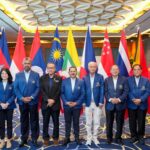
The notion of time often differs from one continent to another. 868 days separate Rio de Janeiro from the opening of the 2016 Summer Games, the first organized on Brazilian soil. In Brazil, these twenty-nine months seem like an eternity. In Lausanne, headquarters of the IOC, they appear very short. Led by the Moroccan Nawal El Moutawakel, the Coordination Commission of the Olympic institution concludes this Friday, March 21, its sixth inspection visit to the host city of the 2016 Games. A three-day tour which highlighted the sometimes immense gap between the requirements of the IOC and the functioning of the Brazilian organizers.
On the Brazilian side, everything seems to be going well. At least in speech. The organizing committee for the 2016 Games took advantage of the visit of the Coordination Commission to take out a whole sheaf of good news from its pockets. At the top of the list is the marketing program. The Brazilians have signed four lucrative partnership contracts. And they are reportedly close to finalizing ten more. With 14 companies at their side, they could already count on around 80% of a sponsorship budget estimated at 2,1 billion euros. So far, so good. And even better than good.
Other good news: the pre-Olympic calendar is taking shape more clearly. The organizing committee announced the names of the five cities that will host the football tournament: Rio, Sao Paulo, Belo Horizonte, Brasilia and Salvador. He also announced that the test events would take place between July 2015 and May 2016, with the exception of the sailing regattas, brought forward to August 2014. Here too, Brazil remains in the lead.
Elsewhere, the grass is less green. The work is behind schedule. A delay which continues to worry the IOC. Nawal El Moutawakel reiterated, during the Coordination Commission's visit, that Brazilians should “take an example from Sochi,” where “planning was meticulous. » She also called on the organizers to review their deadlines, so as not to let time pass them by, and to take care of their communication towards the Brazilian population, to avoid encountering the same hostility as for the 2014 Football World Cup.
Proof of the reality of the problem: the mayor of Rio de Janeiro, Eduardo Paes, admitted to the IOC delegation that significant delays had accumulated at many competition sites. He also explained, to everyone's surprise, that the media village might be moved from its original site to reduce costs. For his part, David Howman, Director General of the World Anti-Doping Agency (WADA) reiterated that the Rio anti-doping laboratory should be ready as soon as possible, in order to be able to operate effectively during the Games. At D – 868, the countdown has never seemed to run so quickly.
Photo: Rio 2016/Alex Ferro