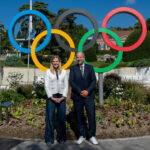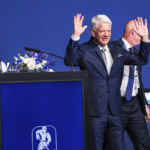
Heads are changing at the IOC. Since the arrival of Thomas Bach as president last September, the management of the Lausanne-based institution has been undergoing major renewal. Christophe Dubi, one of the “old hands” of the house, sports director since 2007, will become executive director of the Olympic Games from the start of next year. He explained to FrancsJeux the reasons and, beyond that, the new IOC policy.
FrancsJeux : Three new directors will arrive at the IOC in the coming weeks. Is this proof of Thomas Bach's desire to break with the past and surround himself with a new team?
Christophe Dubi : No way. These changes are part of the normal course of things. They are the result of a combination of factors. Some IOC directors are reaching the legal retirement age in Switzerland, which is 65. This is the case, for example, of Gilbert Felli. They must therefore be replaced. As for the finance director position, it had been open for some time. These arrivals will bring new energy to the IOC. The sports director who will succeed me, Kit McConnell, has extensive field experience, acquired particularly in rugby. His contribution will be very appreciable.
What exactly does the role of IOC Sports Director involve?
I always thought it was the most beautiful job in the world! This function is divided into two roles: supervising the organization of sport at the Olympic Games, and ensuring a more institutional form of liaison with the program, athletes, entourage and sport for all commissions. Implicitly, the sports director weaves and maintains a network of relationships with the hundred or so international federations directly or indirectly concerned by the IOC's activity.
Will the arrival of Thomas Bach be followed by a new IOC policy?
The essential thing in the short term, from 2014, is Thomas Bach's desire to consult all the players in the movement and to think about what needs to change. Many ideas were put forward by the different candidates for the IOC presidency during the campaign. Thomas Bach wants to discuss them in order, in certain cases, to put them in place soon.
Will Thomas Bach mark a break with the past?
It is too early to tell. But he has a different vision of the Games and the movement. We will have proof of this next year. He is, for example, in favor like the other candidates of more flexibility in the program. We will get there, but we will have to take the time to study the means and think about all the hypotheses.
So could we imagine, as Thomas Bach suggested during his recent visit to Japan, that baseball and softball would make a return to the 2020 Games?
It's an idea like any other, but it's not the only one. Today, it is impossible to make projections. But one thing is certain: the IOC’s desire is clearly not to close the door to any sport.
So the program for the Tokyo Games in 2020 has not been finalized?
For us, it is, but only in broad terms. After Rio in 2016, we will review the program in more detail and there will undoubtedly be proposals to modify certain events. After the Vancouver Games in 2010, no less than 12 events were added to the program for the Sochi Olympics. They are a plus. The same may be true for the Tokyo Games in 2020.