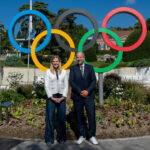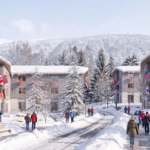
Symbolic date for the Sochi Games. This Thursday, October 10, the countdown shows D – 120 before the opening of the 2014 Winter Olympics. The opportunity to examine a sometimes thorny question: the place of the French language during the event. Will the Russians respect the charter? Answers from an expert, Audrey Delacroix, Commissioner for the French language in the Olympic Games within the International Organization of la Francophonie (OIF).
FrancsJeux : 3 months before the start of the event, is French threatened as an official language at the Sochi Games?
Audrey Delacroix : French is not threatened as the official language of the Sochi Games. He will be present, but three months before the Games, several adjustments still need to be made, which is completely normal in the process of organizing a major international event. The Russians are very proud to organize these Games and know how to welcome. President Vladimir Putin is personally very involved in the preparation of this event, the pressure weighing on the shoulders of the Organizing Committee is enormous. The Russian organizers have no room for error and they know it. For all these reasons, we are confident in their ability to organize their Games in French, Russian and English.
What actions are currently being taken to ensure the place of French at the 2014 Winter Games?
We intervene at three levels: political, diplomatic and technical. The political action is led by the Secretary General of La Francophonie, SEM Abdou Diouf, who met Jacques Rogge last June and sent several messages to Dimitry Chernychenko, the president of Sochi 2014. He also told Hélène Carrère d'Encausse, Permanent Secretary of the French Academy, the role of Great Witness of the Francophonie for the Sochi Games. She will be the privileged interlocutor of the senior Russian authorities on the preparation of these Games from the point of view of the Francophonie. Diplomatic action is being carried out with the support of French-speaking embassies accredited in Russia, with which we have already initiated contacts and which we intend to mobilize during my next trip to Moscow, at the end of October. They will help us on site to identify subjects worth discussing with the organizers and to monitor our negotiations. Their collective involvement, as during the previous Games since Beijing, is essential to demonstrate the involvement of the entire French-speaking institutional family alongside the French-speaking Olympic movement and the OIF. Finally, technical and cooperation action consists of supporting, on the one hand, the efforts of the organizers, by providing them with additional resources. Thirty young French-speaking translators and interpreters will be sent to Sochi during the Games, financed by the OIF and the French, Swiss and Quebec governments. On the other hand, we alert the IOC and Sochi 2014 when malfunctions are reported to us such as the ban on using the French translation of the toponym "Sochi" because only the English trademark "Sochi" has been registered, or the fact that only 10% of announcements will be made in French on the competition sites, the pooling of French translation and interpretation teams between several sports on the competition sites, the use of too few experienced interpreters and translators and the risks of non-payment of labor. These are subjects I opened up about to the IOC last week and which I will discuss in Sochi and Moscow in the coming weeks.
Was the recent visit made by Hélène Carrère d’Encausse to Russia positive?
Visits to Russia by Madame Carrère d’Encausse are always eagerly awaited and appreciated at the highest level. His last trip also followed the publication of his work on the Romanov family which gives Russians a significant part of their history. We are currently working on a trip to Russia by Madame Carrère d'Encausse before the end of this year, specifically on the theme of the Sochi Games. She expressed the wish to meet Mr. Chernychenko, the President of Sochi 2014, and to sign with him an agreement between the OIF and Sochi 2014.
Jacques Rogge has just left the presidency of the IOC. What was his legacy for the sporting Francophonie?
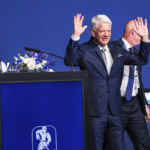
Jacques Rogge was the guardian of the temple, he kept things on track. He always gave us the warmest welcome and systematically responded to the requests for support we sent him when we were no longer able to advance the interests of French speakers. He made several symbolic gestures testifying to his desire to consider the sporting Francophonie as an actor in its own right. In doing so, he helped us create the conditions to make the French-speaking Olympic movement want to organize itself, to structure itself, to promote its projects and interests. One of the most recent results of this common momentum is the creation in 2010 of the French-speaking Association of National Olympic Committees (AFCNO) with which the OIF signed a memorandum of understanding on September 15 in Nice, during the 4th General Assembly of the AFCNO. On the program: sending young French-speaking volunteers to sports organizations, better collaboration within the framework of the Francophonie Games, support for the actions of the Grand Témoin and promotion of the French language, improving the preparation of French-speaking athletes, gender equality... In In the wake of the positive signals sent by Jacques Rogge, the sporting Francophonie is getting organized.
How does Thomas Bach's mandate as head of the IOC look like from a French-speaking point of view?
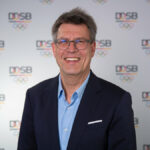
Between continuity and reinforcement of the impetus given by Jacques Rogge. In any case, this is what we hope for and we have good reason to believe in it, because Thomas Bach shares many of our values and priorities. Reread his CV and his program as a former candidate for the IOC presidency. He is multilingual and speaks French perfectly. However, we advocate not the omnipotence of French against other languages, but multilingualism. He campaigned on the theme of “unity in diversity”. However, it is a motto particularly dear to Léopold Sédar Senghor, the former President of Senegal and founding father of La Francophonie. Thomas Bach also wants to take advantage of the exceptional nature of the Olympic Games, exploiting their full potential, in particular by strengthening the link between sport and culture. At our level, this is also what we aim to do with the Francophonie Games. I would add that we met him on several occasions, particularly in London where he was present at each of the events initiated by the Francophonie and its Great Witness, the former Governor General of Canada, Madame Michaëlle Jean.
All the conditions are there to take a further step with him in our good collaboration with the IOC and the French-speaking Olympic movement.