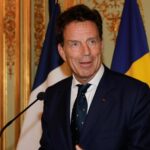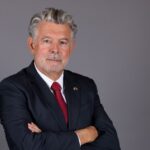
End clap on the 7th Francophonie Games. The 2013 edition lowers its curtain this Sunday, September 15, with a closing ceremony at the Charles Ehrmann stadium in Nice. Clément Duhaime, the administrator of the International Organization of the Francophonie (OIF), draws up an initial assessment. Interview.
FrancsJeux : What impression did these 7th Francophonie Games leave on you?
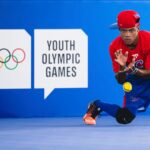
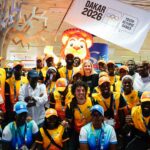
Clement Duhaime : The results are very positive. After Niamey in 2005 and Beirut in 2009, the event confirms its rise in power. In Nice, participation reached 54 countries. A record. The quality of juries has never been so high, we sought out the best. And the International Federations of the sports concerned are now fully playing the game. From one edition to another, sport and culture occupy the field differently. In Nice, it seems that the Francophonie Games had more obvious success in the cultural events, thanks in particular to certain novelties, such as hip hop, giant puppets and ecology.
What does the French-speaking world of sport represent today?
A place of excellence and meeting. The Games of La Francophonie constitute a special event, where sport and culture mix, as at the origin of the Olympic Games. We must preserve this duality because it makes the manifestation original. These Games also serve as a springboard for young athletes. David Douillet, for example, cut his teeth there, long before becoming Olympic judo champion. But we must keep these Games their festive spirit, without falling into gigantism. They must maintain a human dimension.
So participation will no longer increase?
No, I think we're full. In Beirut, 40 countries were present. There were 54 of them in Nice. But I would like to point out that we do not make a distinction between OIF member countries and observer countries. They are all invited.
Is there still a French-speaking network in international sport today?
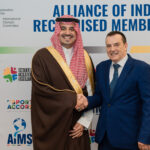
Yes. It is even becoming better and better organized. In 2009, we decided to set up French-speaking Olympic academies. Two years later, an Association of National Olympic Committees of French-speaking countries was created, on the initiative of Denis Masseglia, the president of Cnosf. She is holding a meeting in Nice on the occasion of the Francophonie Games. Cycling plans to organize a French-speaking association, like what already exists in table tennis. The French language does not disappear from the international sporting landscape, but it owes its dynamism to the action of French-speaking leaders who come together and organize themselves into networks.
Despite everything, English seems to have taken over in major international sports organizations?
We are not waging a fight against English. Our fight is that of diversity, so that all languages coexist and continue to be spoken. French, of course, but also other languages.
How are the Sochi Games looking, from a French-speaking point of view?
Hélène Carrère d’Encausse was named Great Witness of the Francophonie by Abdou Diouf, the Secretary General of the OIF, for the Sochi Games. She has to go there next week. She is scheduled to meet Vladimir Putin. A contingent of 30 French-speaking volunteers was sent to Sochi, with the help of Switzerland and Quebec, to work on official documents and texts. Despite everything, the situation remains worrying. We have been alerted that Russia plans to broadcast in French only 10% of announcements made on the microphone at the Olympic sites. And we are asked by the International Federations to help them impose their commentators in French at the Games.