President of the International Organization of the Francophonie, the Senegalese Abdou Diouf knows the Olympic movement and its future former president perfectly. He evokes for FrancsJeux the legacy of the Belgian leader, but also the place of French in the sports movement and the 2013 Francophonie Games in Nice.
FrancsJeux: The Olympic movement is preparing to change President on September 10. In your opinion, what legacy will Jacques Rogge leave?
Abdou Diouf: That of a builder and a visionary. The notions of inheritance and legacy correspond perfectly to it. He led and successfully completed many crucial projects for the future of the Olympic movement: organization of the Games in emerging countries and creation of the Youth Olympic Games, strengthening the place of women in sport, fight against corruption and improvement in the fight against doping. Without forgetting the cultural openness that he has always demonstrated as part of our excellent collaboration. Jacques Rogge has always been there to support our efforts with the organizers of the Games in order to gradually strengthen the place of the French language in the Olympic Games and I am grateful to him.
Is the Francophonie still a dominant force within the IOC? What are its future prospects?
It is above all a question of self-awareness and willpower. Yes, there are many French speakers within the Olympic and international sports movement, including in positions of responsibility. Look at their recent successes with, for example, the election of Tony Estanguet to the IOC and that of Jean-Christophe Rolland to the President of the International Rowing Federation! Yes, they know the Olympic movement well. Yes, they are competent. But are they sufficiently aware of themselves, of the influence they can exercise and the force they can represent if they work together, among French speakers, around major projects and the major issues that cross the Olympic movement?
Since the Beijing Games, we have encouraged the formation of a French-speaking sports family: relations with IOC members, support for the creation of French-speaking associations of National Olympic Committees (NOCs), international federations, Olympic academies, events French speakers during the Games for example.
I say to French-speaking sports leaders: come together, work together in a network, organize yourself to share and promote your interests together. You have something specific to assert but you must be united. The OIF knows how to exercise a real magistracy of influence with its 77 states and governments. She is ready to accompany you even more.
What assurances do you have that French will be well treated, as the official language of the IOC, during the Sochi Games?
On a technical level, we have been working closely with Sochi 2014 since September 2012 and have already planned to send around thirty young volunteer French-speaking translators and interpreters. We also recommended around fifteen professional interpreters. We are also in regular contact with various people associated with the preparation of the Games who can alert us in the event of any malfunctions in the provision of linguistic services.
On the political level, I entrusted Hélène Carrère d’Encausse, Permanent Secretary of the French Academy, with the mission of Grand Témoin de la Francophonie for the Sochi Games. She is a remarkable woman who knows Russia better than anyone and who defends the French language with conviction and passion. I also recently visited Jacques Rogge with whom I discussed this subject and who once again provided his support on the delicate points. All that remains is to meet Dmitry Chernyshenko, President of Sochi 2014, and sign our partnership agreement with him, as during previous editions of the Games.
Among the six candidates for the IOC Presidency, which one seems the most “French-speaking” to you?
I am convinced that they all have, in one way or another, a French-speaking fiber that will become our ally. Some come from French-speaking countries, others speak French perfectly and are present at our events, still others have, in the recent or long past, made strong symbolic gestures towards French speakers, have become accustomed to to work with French-speaking sports and institutional networks or have already had the opportunity to meet us.
The man of the future of the IOC, since there is unfortunately no candidate, will be the one who will embody diversity, openness to difference. The Olympic movement, the Olympic Games, which receives more than 200 delegations from all over the world, and presents almost 30 different sports, is diversity in essence! They cannot give in to the temptation of uniformity! Single thinking, monolingualism, single gastronomy, etc., it makes no sense in this context and it would be regressive. I therefore invite the candidates for the IOC Presidency to include this concern and this need for openness in their long-term project, and not just for the immediate electoral deadline.
How do you think the Francophonie Games look in September in Nice?
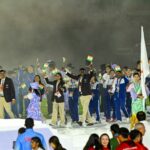
We are a few days away from this major event since the prestigious opening ceremony will take place on September 7 under the Presidency of François Hollande, in the presence of several heads of state and numerous personalities. 55 delegations and more than 3000 young athletes and artists will be welcomed.
The Francophonie Games are an event in which I believe a lot. Still young, since it is only the 7th edition, it is a unique concept combining sports competitions and artistic competitions. For the first time in Nice, we will also host Paralympic competitions. Many young winners go on to have great Olympic or artistic careers: we are here to give them a chance and give young French-speaking talents a chance. The city of Nice, the French authorities and the participating countries are strongly mobilized to guarantee the success of this 7th edition.