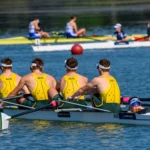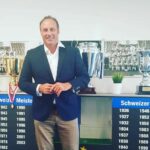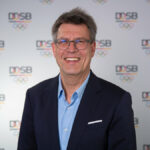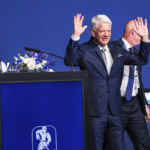
He is the only French-speaking candidate for the presidency of the IOC. And one of the oldest in the place, having been a member of the Olympic institution for 22 years. The Swiss Denis Oswald answered questions from FrancsJeux in Chungju, South Korea, where was held until Sunday 1er September the world rowing championship, a sport for which he has presided over the International Federation since 1989.
FrancsJeux : Why did you apply for the IOC presidency?
Dennis Oswald: I want to put my experience at the service of the IOC. Since joining this institution in 1991, I have held very important positions, remaining 12 years on the executive commission and chairing the coordination commissions for the Athens and London Games. I know the ropes. I know how to reconcile the parties that make up the IOC. But I also want to defend a certain vision of sport, the vision of a clean sport. A sport which, like rowing, places the athletes at the center of the scene. However, I understood a long time ago that the higher you are placed in the hierarchy, the better you can defend your ideas.
If elected, what will be your priorities as IOC President?
I want to review the distribution of skills and powers between the session, that is to say all the members of the IOC, and the executive board. The affair of exclusion from wrestling recently demonstrated that the question of the program, for example, should not be the sole responsibility of the executive commission. We need to rebalance the powers between these two parties, because some members of the IOC today have the impression that they no longer have a say in decisions. They no longer decide much, other than the host cities of the Olympic Games.
The question of the Games program is at the center of numerous debates. What is your position on the subject?
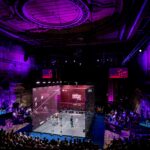
It is obvious today to everyone that the overall budget for the Games must not increase. But it is crucial, I believe, to bring in new sports. Squash, karate, roller skating, climbing, for example, are waiting at the door and should be able to enter. To achieve this, we will have to study, sport by sport, the interest of retaining certain disciplines which no longer necessarily have their place in the Games. This solution, which is also inexpensive, would make it possible to expand the variety of sports offered without increasing the already limited size of the Olympic Games.
Are you in favor of the return of the principle of visits to candidate cities by all IOC members?
Yes. How can we judge the quality of a file without seeing the reality on the ground? But the visits must be purely technical. And not last more than three days. A candidate city must offer three three-day periods to IOC members. It is then up to everyone to choose one to get an on-the-spot idea of the quality of the file.
You are the only French-speaking candidate for the presidency of the IOC. Is this an asset or a liability?
This is not an advantage, but neither is it a disadvantage. I have been one of the first to defend, for a long time, the French language in the Olympic movement. I worked a lot in this direction with the International Organization of the Francophonie (OIF) before the London Games. And we got results. But French is losing ground, that’s obvious. At FISA, for example, it is common to see three-quarters of the audience reach for headphones to benefit from a translation when I speak in French in a meeting. There are significantly fewer people doing so if I speak directly in English.
Despite everything, is there a French-speaking network within the Olympic movement?
I hoped, by running for the presidency of the IOC, to benefit from the sympathy of the French-speaking members. In Africa, in particular. But today, I am not convinced that I can count on their votes...
One week before the vote, how do you estimate your chances of winning?
I am in question. The election will be played by secret ballot, and many members prefer to keep their choice to themselves. It is very difficult to feel the wind. I stopped doing calculations a long time ago, I prefer to talk to as many voters as possible. I received very good feedback from my presentation brochure and my ideas. Many tell me that I would make a very good president. But that doesn't mean they will all vote for me.
What do you think the 2020 Summer Games city election will be about?
Here too, it is very difficult to know. Tokyo does not have the symbolism of Istanbul, but the IOC knows that the Japanese will be able to deliver impeccable Games. Istanbul is offering a bid full of symbols, with Games on two continents, in a country that is making progress. But the events of recent months could hold some back. On the Madrid side, the economic situation is worrying, but the Spaniards were able to exploit it by presenting a smaller budget than the other two cities and explaining that 80% of the sites were already built. All three cities have their strengths.
One last question, more directly French: should Paris apply again for the Games?
Yes. I have never hidden the fact that I voted for Paris for the 2012 Games. The Parisian candidacy seemed the best to me, even if London ultimately offered magnificent Games. Paris must launch again, but by giving itself the means to win, because France can no longer afford another failure. His candidacy must be supported by a very good team. Above all, politicians must put themselves at the service of athletes, and not the opposite as for the 2012 Games. And we must see in the long term, by creating the infrastructures necessary for the Games between now and then. A file where many installations are already ready always has a greater chance of winning. Take the case of Pyeongchang 2018. The Koreans were candidates three times. Each time, we explained to them what was wrong. They listened, they built, they followed the IOC’s instructions. How do you always say no to someone who does everything you ask of them?
Comments collected by Alain Mercier in Chungju (South Korea)