
Istanbul, Madrid and Tokyo are not the only ones competing for IOC member votes. Another three-way battle, less visible, is currently being played out within the Olympic institution. It concerns the Scottish city of Glasgow, the Colombian city of Medellin and the Argentinian city of Buenos Aires. Three candidates for the organization of the Summer Youth Olympic Games (YOG) in 2018. The verdict must be rendered on Thursday July 4, the second day of the extraordinary session of the IOC.
Who can win, to succeed Singapore in 2010 and Nanking 2014? Difficult to answer. But there is at least one element of the case where the battle seems very unbalanced: the budget. Buenos Aires pales in comparison. With only 79 million euros to invest, the Argentine capital will undoubtedly struggle to compare. Medellín has promised an investment of 129 million euros. But the prize goes to the city of Glasgow, with a budget of more than 270 million euros.
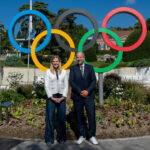
For the rest, Glasgow presents the strongest guarantees. It must host no less than five international events between 2013 and 2015. And it can count on the very media support of two figures of British sport: Andy Murray, the gold medalist tennis player at the London Olympics, and Sir Chris Hoy, multiple Olympic medalist in track cycling, who came to Lausanne as part of the bid committee.
Medellín is not left out. Although it has only half the budget of Glasgow, the Colombian city offers a unique setting. Located in the heart of the Andes, its location is its greatest asset. In addition, it already has some sports infrastructures. On the support side, heavy, but very political: Juan Manuel Santos Calderon, the President of the Republic, present in Lausanne. More anecdotal: Mariana Pajón, gold medalist at the London Games in BMX.
Buenos Aires seems to be lagging behind the pack. At the beginning of June, she had to reaffirm her commitment to the race for the Olympic Games, after the publication of the rather unfavorable report from the evaluation commission. The South American city also suffers from the law of geographical alternation, little to its advantage by the presence of the Rio Games two years earlier.
In detail, the strengths and weaknesses of each of the three candidates:
Buenos Aires
Strengths: Second largest city in South America, it benefits from a rather temperate climate, although humid in summer. Large reception capacity.
Weaknesses: Smallest budget of the three candidate cities. Poorly completed file. Competition with Rio 2016.
The rating of FrancsJeux : 10%
Glasgow
Strengths: A solid budget (nearly 300 million euros). Sports facilities already built. Recognized ability to organize major sporting events (five between 2013 and 2015). Support from Chris Hoy and Andy Murray.
Weaknesses: Scottish climate, often rainy. Lack of strong political support. Competition with the London Games in 2012.
The rating of FrancsJeux : 50%
Medellín
Strengths: A very respectable budget (129 million euros). A privileged geographical location. The support of Colombian President Juan Manuel Santos Calderon and the country's largest bank, Bancolombia.
Weaknesses: Its inexperience in organizing global sporting events. The question of accommodation and transport, still very vague.
The rating of FrancsJeux : 40%
By Théodore Heitz
[email protected]